

Thirteen subject areas aimed at strengthening foundational learning and equipping pupils with 21st-century skills, values, and ethical principles will form the focus of a revised basic education curriculum developed by the National Council for Curriculum and Assessment (NaCCA).
The revised curriculum, covering Kindergarten through Primary Six, includes Ghanaian Language, English Language, Chinese, Arabic, French, Religious and Moral Education, Mathematics, Physical Education and Health, Creative Arts, Citizenship Education, Computing, and Science, including Agriculture. These subjects are intended to enhance the quality of basic education and provide pupils with a broad range of knowledge and skills.
The revised curriculum was presented to the Minister of Education, Haruna Iddrisu, in Accra on Wednesday, July 22, 2026, by the Director-General of NaCCA, Professor Samuel Ofori Bekoe, who chaired the committee responsible for the review.
Following the presentation, the Minister directed the Ghana Education Service (GES) to thoroughly review the revised curriculum and ensure that it meets the required standards for full implementation. He emphasised the need for “full implementation readiness and strict quality standards” to facilitate effective and smooth execution in classrooms.
The proposed inclusion of Chinese language, in particular, has generated public discussion and concerns about its relevance and whether it would be compulsory. In response, the Minister of Education clarified that Chinese, Arabic, and French will not be compulsory subjects under the proposed new basic school curriculum.
According to him, the foreign languages will remain optional at the upper primary level and not at the kindergarten level, with English and Ghanaian languages serving as the primary medium of instruction.
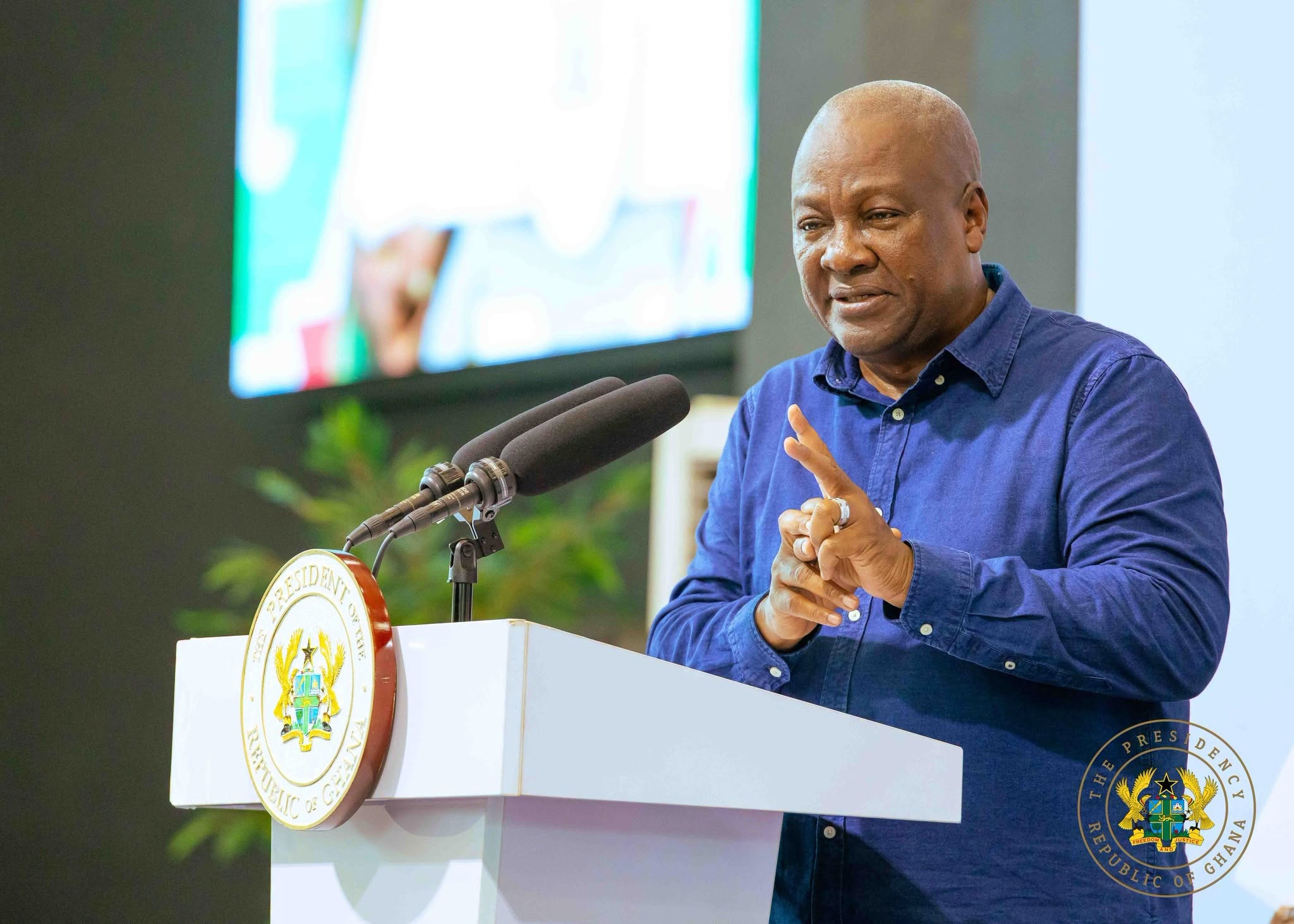
But speaking during a Citizens’ Engagement held in Wa at the climax of his two-day Resetting Ghana Tour of the Upper West Region on Saturday (Sept 12), President Mahama “There is absolutely no new policy that says that Arabic and Chinese [languages] are going to be introduced in our school curricula…”
“As Chair of Cabinet, I can confirm that no new curriculum has been submitted for Cabinet’s approval. Any proposal to alter the subjects taught in our schools must first come before Cabinet before becoming official policy. Therefore, claims that Arabic or Chinese are being introduced are unfounded.
As President of the Republic of Ghana, I emphasise that no such policy has been approved by Cabinet, and this matter should be put to rest. We are surrounded by French-speaking countries, yet we still struggle to strengthen French education. Why then would we introduce Chinese? Where would we even find qualified teachers? French teachers are already scarce, and recruiting Chinese teachers would mean flying them in from abroad. This is simply not a practical or approved policy

