
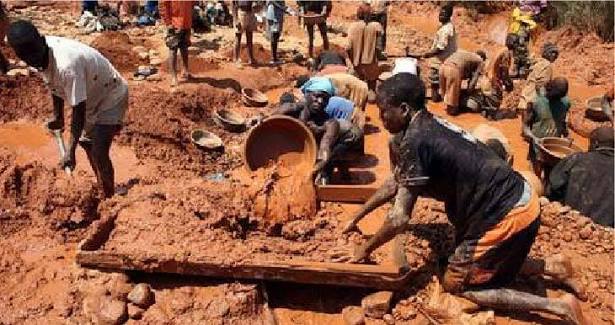
The Ghana Catholic Bishops’ Conference (GCBC) has expressed concern that government interventions to combat illegal and irresponsible mining are not yielding the promised or expected results. In response, they are calling for a targeted state of emergency to address this issue. This appeal was made in a communiqué issued at the conclusion of their Annual Plenary Assembly, which took place at Jamasi in the Ashanti Region from November 3 to 14, 2026.
The communiqué, signed by the President of the Conference, Most Rev. Matthew Kwasi Gyamfi, the Catholic Bishop of Sunyani, was released on Friday, November 13, 2026, at St. Paul Cathedral in the Konongo-Mampong Diocese. The theme of the Assembly was “Communion, Participation, and Mission: Preparing the Catholic Church in Ghana for Her 150th Anniversary in 2030.”
Declare targeted emergency
The Bishops expressed their deep concern regarding the devastation caused by galamsey, particularly the pollution of water bodies, destruction of forest reserves, degradation of agricultural land, and threats to public health. “In the spirit of integral ecology, we reaffirm that caring for our common home is inseparable from upholding human dignity, ensuring social justice, and safeguarding the wellbeing of future generations,” the communiqué stated. “We therefore call upon His Excellency the President, as the leader of the Republic, to demonstrate courage and determination in protecting the environment and to show stronger leadership in the fight against galamsey.”
They said the time has come for tougher action.
The Bishops have called on the government to declare a targeted state of emergency in communities most severely affected by illegal mining, popularly known as galamsey, arguing that existing measures introduced by President John Mahama’s administration have yet to deliver the expected results. They maintained that the time had come for more decisive action to tackle the menace, particularly in areas experiencing the worst environmental destruction.
According to the Bishops, such an emergency declaration should pave the way for the development and enforcement of regulations that promote responsible mining practices and protect the environment. They further urged regulatory bodies, security agencies, traditional authorities, religious leaders and the general public to pool their efforts and resources to combat illegal mining, which they described as a common threat. “The fight against galamsey must confront networks of complicity, ensure accountability, provide sustainable livelihood alternatives and promote community participation in environmental protection,” the communiqué stated.
Other national concerns
In addition to illegal mining, the Bishops expressed concern over the rising incidence of drug trafficking and substance abuse, warning that the situation poses serious risks to public health, family cohesion, youth development and national security. They called on relevant state institutions to strengthen intelligence-driven operations and enforcement measures, including lawful sanctions, tighter border controls, public awareness campaigns and rehabilitation programmes.
The Bishops also raised concerns about increasing indiscipline in some educational institutions, including mission schools, pointing to reported cases of violence, disrespect for authority, examination malpractice and vandalism. They described allegations of sexual abuse involving minors in schools by some adults entrusted with their care as particularly disturbing.
“We call upon the Ministry of Education, the Ghana Education Service, school authorities and the relevant departments of the Police to investigate these allegations dispassionately and let the law take its course,” they stated. On the Human Sexual Rights and Family Values Bill, the Bishops acknowledged Parliament’s decision to withdraw its earlier approval of the legislation and urged Parliament and relevant constitutional bodies to ensure that any further consideration is undertaken promptly, in accordance with constitutional provisions and through a thorough legislative process.
The Bishops also expressed grave concern over the prolonged conflicts in Bawku and Kalba-Gbinyiri, calling for the full and impartial implementation of recommendations contained in the report on the Kalba-Gbinyiri conflict. They stressed that the recommendations must be implemented without discrimination, selective enforcement or unnecessary delays.
150th anniversary
The Plenary also focused on preparations towards the 150th anniversary of the Catholic Church in Ghana in 2030, to be observed under the theme “150 Years of Catholic Evangelisation in Ghana (1880-2030): A Journey of Faith, Mission and Hope”. The Bishops announced that 2027 will be the Year of Jesus Christ, The Son of God; 2028 the Year of the Holy Spirit; and 2029 the Year of God the Father, with the climax in 2030.

