
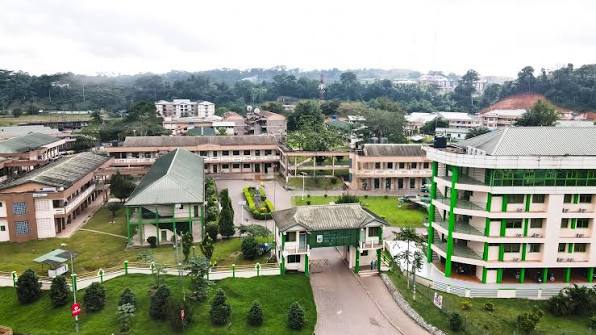
The University of Mines and Technology (UMaT) in Tarkwa is introducing a One-Meal-a-Day Scheme designed to provide daily meals for students facing financial difficulties. This initiative is part of a broader package of welfare programs aimed at improving students’ well-being and supporting their academic success. The Vice Chancellor, Prof. Bernard Kumi-Boateng, announced the scheme during the university’s 25th Matriculation Ceremony.
The One-Meal-a-Day Scheme is expected to offer nutritional support to students who struggle to afford regular meals while pursuing their academic programs. Prof. Kumi-Boateng emphasized that this initiative is one of five key student welfare measures being implemented by the university’s management to ensure that financial and personal issues do not prevent students from achieving their academic goals. He highlighted the importance of the connection between students’ well-being and their academic performance, stressing that no student should be disadvantaged due to their inability to meet basic needs.
“Academic excellence cannot be achieved in isolation. We must also focus on the physical, emotional, and financial well-being of our students,” he stated. In addition to the One-Meal-a-Day Scheme, UMaT will introduce an Emergency Student Support Fund to assist students facing unexpected financial difficulties, medical emergencies, and other personal challenges. The university will also implement a Work-Study Scheme, providing paid part-time employment opportunities for students in libraries, laboratories, and administrative offices, allowing them to earn additional income while gaining practical work experience.
Other initiatives include enhancing the Counselling and Student Support Unit to address students’ mental health and emotional well-being. The Vice Chancellor noted that these measures aim to create a supportive university environment where students can focus on their studies without being excessively burdened by challenges that could hinder their academic progress.
UMaT Admits 5,787 Fresh Students
UMaT recently announced significant welfare interventions as it recorded a notable increase in student enrolment for the 2026/2027 academic year, admitting 5,787 new undergraduate students. The university received a total of 23,081 applications, up from 21,489 the previous year, indicating a growing interest in its programs.
Among the newly admitted undergraduate students, 4,496 will attend the Tarkwa Campus, 1,104 at Essikado, 155 at Kenyasi No. 2, and 42 at the Bibiani Study Centre. Additionally, 320 students have enrolled in the Pre-Engineering program. Prof. Kumi-Boateng noted that female students comprised 2,193 of the undergraduate intake, making up 38% of the total, which he described as encouraging progress in traditionally male-dominated fields such as mining, engineering, and geosciences. Furthermore, the university admitted 572 postgraduate students into Master’s and PhD programs, increasing its postgraduate population to 2,078. With a total of 17,605 undergraduate students, UMaT’s overall student population has now reached 19,683.
Infrastructure expansion to accommodate growing numbers
Prof. Kumi-Boateng said the increasing demand for admission had heightened the need to expand the university’s infrastructure to accommodate more students without compromising academic standards. Under its Infrastructure Leap 2030 initiative, management plans to construct additional faculty blocks, expand lecture halls, modernise laboratories and equip classrooms with smart technology by 2028.
The university is also pursuing the development of its Essikado, Samahu and Kenyasi No. 2 campuses, alongside the expansion of the Bibiani Study Centre. These interventions form part of a broader strategic plan to increase UMaT’s student population from nearly 20,000 to 30,000 by 2034 while maintaining the quality of teaching and research.
UMaT Targets MIT of Africa Status
Prof. Kumi-Boateng reaffirmed his ambition to transform the University of Mines and Technology (UMaT) into the “MIT of Africa.” He stated that the university would intensify its efforts to enhance academic and research capabilities while deepening partnerships with industry. He emphasized that research would increasingly target practical challenges facing society and industry, particularly those related to environmental protection and the pollution of water bodies. “Our core mission remains teaching and research, and we will not compromise on the quality of either,” he stressed.
He challenged the newly admitted postgraduate students to focus their research on developing practical solutions to societal and industrial issues, noting that with 572 new students, there is potential for 572 meaningful solutions. The Vice Chancellor also encouraged the students to position themselves as problem-solvers in the evolving global mining and energy sectors, especially as these industries shift towards more sustainable practices.
Warns Students Against Misconduct
Prof. Kumi-Boateng cautioned the students against examination malpractice, plagiarism, academic dishonesty, hazing, bullying, violence, sexual misconduct, drug abuse and cybercrime. He also warned against presenting artificial intelligence-generated work as their own where such use was not permitted, stressing that breaches of the university’s regulations could attract dismissal and possible prosecution. He encouraged the students to familiarise themselves with the university’s statutes and Student Handbook, while cultivating effective communication skills, including listening, writing, speaking and technical drawing.
Vice Chancellor Reflects On UMaT’s History
Reflecting on his academic journey, Prof. Kumi-Boateng revealed that he was a proud alumnus of the University of Mines and Technology (UMaT), having enrolled at the institution 26 years ago. Delivering his maiden matriculation address since assuming office, he noted that his experience as a former student had further strengthened his commitment to positioning the university as a leading continental centre of excellence in mining, engineering and technology.
He highlighted the institution’s historical evolution, dating back to its establishment as the Tarkwa Technical Institute in 1952, before becoming the Tarkwa School of Mines in 1960. It subsequently became affiliated with the Kwame Nkrumah University of Science and Technology in 1976 and was reorganised as the Western University College in 2001. The institution attained full university status following the enactment of the University of Mines and Technology Act, 2004 (Act 677), with its first autonomous matriculation ceremony held in 2005.
Describing the 25th matriculation ceremony as an important landmark in the university’s history, Prof. Kumi-Boateng challenged the newly admitted students to cultivate curiosity, innovation, discipline and a commitment to excellence throughout their academic pursuits. “Your background does not decide where you end. Your choices here will,” he reminded the matriculants.
He also urged them to uphold the university’s core values of knowledge, truth, excellence, accountability, integrity, equity, inclusivity and diversity, emphasising the importance of these principles in shaping their academic and professional lives.

