
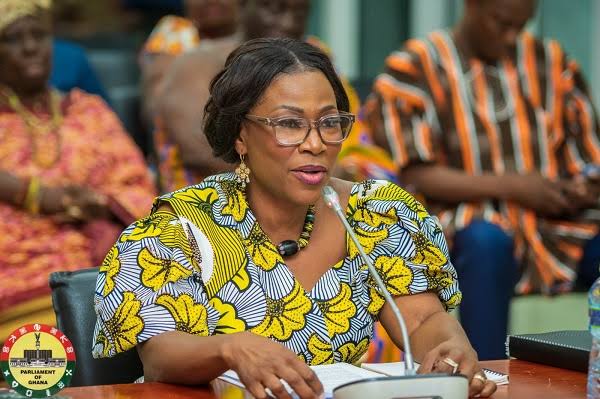
Deputy Minister of Health, Dr Grace Ayensu-Danquah, has called for increased investment in research, regulation and local manufacturing to strengthen traditional medicine and support Ghana’s efforts towards achieving Universal Health Coverage (UHC). She emphasised that scientific research, effective quality assurance systems and stronger regulatory oversight were critical to integrating traditional medicine into the mainstream healthcare system and improving access to affordable healthcare services.
Dr Ayensu-Danquah made the call during the commemoration of the 24th African Traditional Medicine Day and the 27th Traditional Medicine Week celebration in Accra. She noted that traditional medicine remained the primary source of healthcare for many Africans, particularly those in rural and underserved communities, and stressed the need to strengthen the sector through scientific research and effective regulation.
The Deputy Minister highlighted Ghana’s progress in developing traditional medicine, citing the establishment of the Traditional and Alternative Medicine Directorate at the Ministry of Health, the introduction of the Bachelor of Science Herbal Medicine programme at the Kwame Nkrumah University of Science and Technology (KNUST), and the integration of herbal medicine services into 55 public hospitals nationwide.
She disclosed that approximately 600 herbal medicine practitioners had received training, while the Traditional Medicine Practice Act, 2000 (Act 575), provided the legal framework for regulating the practice. Dr Ayensu-Danquah also highlighted the contribution of the Centre for Plant Medicine Research at Mampong, which continues to conduct scientific screening, formulation and development of herbal products to establish their safety and effectiveness.
She said the government’s priorities included protecting indigenous medicinal knowledge, expanding access to herbal medicine services, safeguarding intellectual property rights, ensuring equitable benefit-sharing and supporting local manufacturers to produce standardised herbal medicines that meet international quality and export requirements.
She urged researchers and academic institutions to translate scientific discoveries into practical clinical applications and health products, while encouraging traditional medicine practitioners to collaborate with regulatory authorities and refrain from making unverified claims about their products.
For her part, the World Health Organisation (WHO) Representative in Ghana, Dr Fiona Braka, said between 70 and 80 per cent of people in the WHO African Region relied on traditional medicine, particularly herbal remedies, as a source of primary healthcare. She cited studies in Ghana indicating that approximately 70 per cent of the population depended on traditional, complementary and integrative medicine to meet their primary healthcare needs.
Dr Braka commended Ghana for integrating herbal medicine services into public healthcare facilities, noting that an initiative which began as a pilot programme had expanded to cover 55 government hospitals across the country. However, she identified inadequate research funding, limited clinical trials, insufficient scientific evidence for certain remedies, weak manufacturing capacity and challenges with quality assurance and standardisation as major obstacles to the sector’s development.
She called for greater investment in research and innovation, stronger regulatory frameworks, sustainable local manufacturing, capacity development and the protection of indigenous knowledge through ethical partnerships and fair benefit-sharing arrangements. Dr Braka reaffirmed the WHO’s commitment to supporting Ghana in strengthening research, regulation and institutional capacity to ensure the safe and effective integration of traditional medicine into the national healthcare system.
Meanwhile, President of the Ghana Federation of Traditional Medicine Practitioners’ Associations (GHAFTRAM), Professor Samuel Ato Duncan, described traditional medicine as an important component of efforts to achieve Universal Health Coverage across Africa. He stressed that healthcare services must be accessible, affordable and culturally acceptable, while being delivered by practitioners who enjoy the trust and confidence of their communities.
Prof. Duncan said Ghana had established a strong foundation for traditional medicine development through the creation of the Centre for Plant Medicine Research, the enactment of the Traditional Medicine Practice Act, 2000 (Act 575), and the training of herbal medicine practitioners to doctoral level at KNUST and Pentecost University. He called for sustained collaboration among traditional medicine practitioners, researchers, regulators and development partners to advance research and development and unlock the sector’s full potential.
The celebration brought together health officials, researchers, regulatory authorities, traditional medicine practitioners and development partners to deliberate on strategies for strengthening traditional medicine through research, innovation and improved regulation.

