
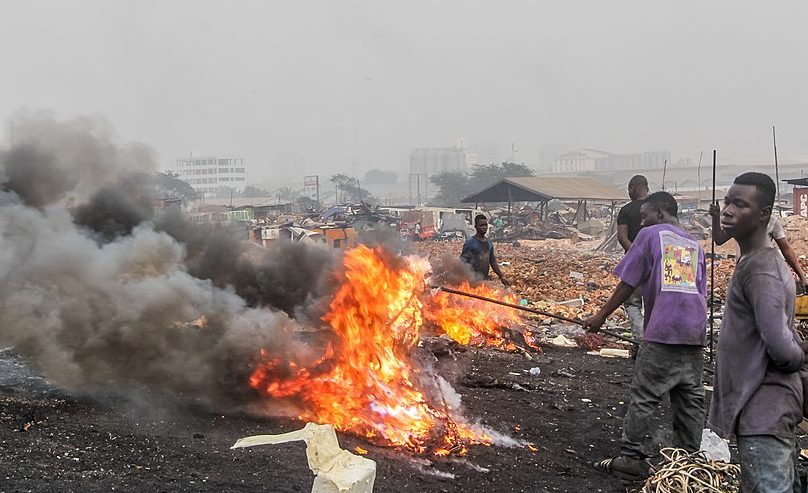
Residents and businesses found responsible for causing air pollution in Accra could face fines ranging from GH¢1,200 to GH¢3,000, imprisonment for periods between 30 days and six months, or both, under a newly introduced Air Quality Control Bye-law. The regulation, formally known as the Air Quality Control Bye-law 2025, is expected to be enforced by the Accra Metropolitan Assembly (AMA) and 12 other municipal assemblies across the Greater Accra Region as part of efforts to strengthen the regulation of activities that contribute to deteriorating air quality.
The Greater Accra Regional Coordinating Council (GARCC) officially launched the bye-law at a media engagement on Thursday, November 26, calling on the implementing assemblies to ensure strict and effective enforcement. The regulation prohibits individuals and groups from undertaking activities that generate air pollution within the jurisdictions of the respective assemblies. It also expressly prohibits open burning.
Under the new requirements, businesses engaged in vehicle body repairs and spraying, carpentry and woodwork, metal fabrication and welding, artisanal block-making and commercial food preparation must obtain the necessary permits from their respective assemblies and the Environmental Protection Authority (EPA). These businesses will also be required to operate from locations approved by the assemblies, with restrictions against establishing or conducting such activities near residential communities, schools, hospitals, water bodies and wetlands.
Speaking at the launch, Charlotte Akwaah-Adjei Marfo, Deputy Director at the Ministry of Local Government, Chieftaincy and Religious Affairs, underscored the serious public health implications of air pollution, particularly for children, older persons and individuals living with pre-existing health conditions.
She referenced a World Health Organization (WHO) assessment indicating that Accra’s annual average concentration of fine particulate matter (PM2.5) stood at nearly 50 micrograms per cubic metre, approximately ten times the WHO-recommended annual guideline of five micrograms per cubic metre. She further noted that reducing particulate matter concentrations to the WHO’s interim target level could help prevent nearly 1,800 premature deaths annually across the wider Greater Accra Region.
Marfo urged the implementing assemblies to intensify public education by communicating the provisions of the bye-law in clear and accessible language. She also emphasised the need to strengthen waste management services to provide residents with appropriate disposal alternatives and discourage the practice of open burning.
The 13 assemblies mandated to implement the regulation are the Accra Metropolitan Assembly, Okaikwei North, La Nkwantanang-Madina, La Dade-Kotopon, Adentan, Korle Klottey, Ayawaso West, Ayawaso North, Ayawaso East, Ayawaso Central, Ablekuma North, Ablekuma Central and Ablekuma West.
The effective implementation of the bye-law will be critical to reducing harmful emissions, improving urban air quality and protecting public health across the Greater Accra Region. Beyond the imposition of penalties, its success will depend on sustained public education, accessible waste management services, regulatory monitoring and the willingness of businesses and residents to comply with environmental standards.

