
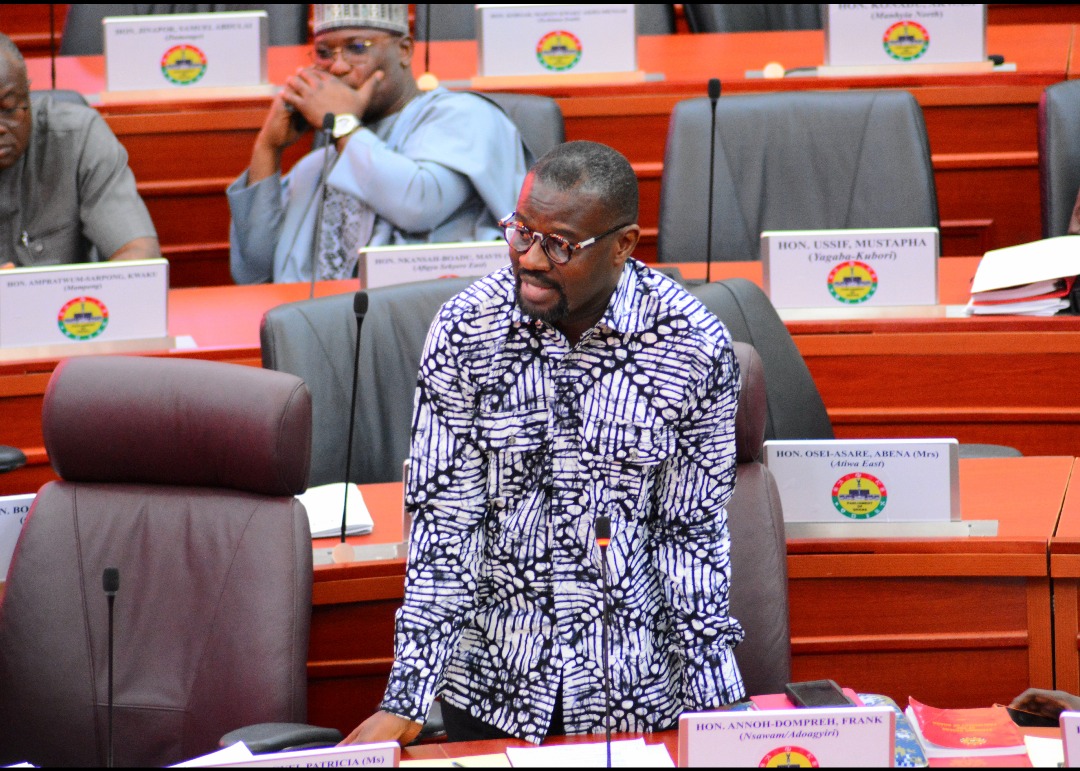
Minority Chief Whip and Nsawam-Adoagyiri MP, Frank Annoh-Dompreh, has sounded the alarm over Ghana’s growing food glut, warning that farmers and market women are suffering substantial financial losses due to difficulties selling their produce despite increased agricultural production. Speaking in Parliament, Mr Annoh-Dompreh said farmers who invest significant resources in cultivating maize, rice, cassava, yam, soya beans and other food crops are struggling to secure buyers after harvest, with some being offered prices below their production costs.
He explained that the situation has made it difficult for many farmers to recoup their investments, settle outstanding loans, pay farm workers and mobilise resources for the next planting season. The MP also drew attention to the challenges facing market women, who spend considerable amounts on transporting foodstuffs to markets but often struggle to sell their goods because consumers lack the financial means to purchase them.
He argued that the problem was not simply an issue of excess food production but rather a reflection of persistent weaknesses in Ghana’s agricultural value chain, particularly in market access, storage facilities, processing, transportation and distribution. Mr Annoh-Dompreh cautioned that if the situation remained unresolved, farmers could become discouraged from investing in agriculture, potentially turning the current food surplus into future shortages.
He said the development also raised serious questions about national development and the government’s constitutional obligation to promote economic growth, improve living conditions, support agricultural development and ensure that citizens have access to basic necessities. Referring to Articles 34(1), 36(1), 36(2)(a), (d) and (e), 36(3) and 36(5) of the 1992 Constitution, he maintained that the government had a responsibility to implement policies that advance agriculture and protect the welfare of citizens.
He further cited Article 103, stressing that Parliament had an oversight responsibility to examine and investigate issues of national importance, including the challenges confronting the agricultural sector. The Minority Chief Whip emphasised that food security must be treated as a vital pillar of national resilience, warning that prolonged disruptions in the food market could worsen rural poverty, erode household purchasing power and undermine the country’s future agricultural production.
NAFCO’s capacity and government funding under scrutiny
Mr Annoh-Dompreh also raised questions about the operational effectiveness of the National Food Buffer Stock Company (NAFCO), which is responsible for purchasing surplus produce, managing strategic food reserves and helping stabilise market prices. Citing Ghana News Agency reports from May 2026, he said NAFCO had an installed storage capacity of about 129,000 metric tonnes, but only between 40,000 and 44,000 metric tonnes were reportedly available for use at the time.
He questioned the gap between the company’s total storage capacity and the facilities actually operational, particularly in light of reported government funding of GH¢300 million towards strategic food reserves. He also referenced a June 2026 report indicating that 45 licensed buying companies had been registered, alongside budgetary provisions of GH¢100 million and a further GH¢200 million in the 2026 Budget.
The MP argued that the funding commitments and institutional structures must deliver concrete outcomes, including increased volumes of food purchases, prompt payments to farmers and the availability of functional storage facilities. He stressed that government investments and policy commitments must translate into meaningful support for farmers and tangible relief for those affected by the food glut, rather than remain figures on paper.
Seven-point intervention proposed
To address the challenges confronting farmers and other stakeholders in the agricultural sector, the Minority Chief Whip outlined a seven-point intervention plan aimed at safeguarding farmers, traders and the broader agricultural value chain. He proposed the introduction of an emergency food-purchasing programme through the National Food Buffer Stock Company (NAFCO) and other relevant institutions, backed by transparent pricing mechanisms, regional purchasing targets and timely payments to farmers.
He further called on public institutions, including schools, universities, hospitals, the Ghana Prisons Service and the Ghana Armed Forces, to prioritise locally produced food in their catering arrangements, subject to quality standards and procurement regulations. He argued that the policy would guarantee a reliable market for local producers while easing the burden on farmers struggling to sell their produce.
On storage and post-harvest management, he urged the government to undertake an immediate audit of public warehouses, rehabilitate non-functional facilities and expand storage infrastructure in key farming communities. He also called for investment in drying, grading, packaging and cold-chain facilities, alongside the introduction of a warehouse receipt system to allow farmers to store their produce and use certified receipts as collateral to secure financing.
Additionally, the MP advocated increased investment in agro-processing and value addition to convert surplus agricultural produce into marketable products. He cited the processing of cassava into gari, starch and flour; tomatoes into paste; maize and soya beans into animal feed; and rice into properly milled and packaged locally branded products.
He also stressed the need to strengthen distribution networks and market access through the establishment of aggregation centres, organised transportation systems, digital market information platforms and partnerships involving farmer cooperatives, market associations, processors and institutional buyers.
On access to finance, Mr Annoh-Dompreh appealed to the government and financial institutions to consider restructuring viable agricultural loans affected by the glut while providing affordable working capital to market women and small-scale traders, particularly women-led cooperatives. He further proposed the establishment of mechanisms to collect, preserve, process and redistribute surplus food in collaboration with local assemblies, food processors, charitable organisations and private distributors, with strict adherence to food-safety standards.
Annoh-Dompreh demands answers from Agriculture Minister
Beyond the proposed interventions, the Minority Chief Whip called on Parliament’s Committees on Food, Agriculture and Cocoa Affairs; Finance; and Trade, Industry and Tourism to undertake an urgent assessment of the situation. He urged the committees to visit affected farming communities and markets to establish the extent of the problem and obtain first-hand accounts from farmers, cooperatives and traders. He also called on the Minister for Food and Agriculture to provide Parliament with detailed information on the volume of unsold produce by commodity and region, the number of affected farmers and cooperatives, and the quantities purchased by NAFCO and licensed buying companies.
The Minister, he said, must also disclose funds disbursed, outstanding payments, the current usable storage capacity and the operational status of the 45 registered buying companies. He further demanded explanations on the government’s plans for institutional procurement and the management of food imports. Mr Annoh-Dompreh called for a time-bound national intervention plan with clear targets, implementation timelines and regular reporting to Parliament.
He said the Ministries responsible for Food and Agriculture, Finance, Trade and Industry, and Local Government must coordinate their response, while Parliament ensures transparency in procurement, independent audits and accountability for public funds. Concluding his submission, the MP warned against allowing increased food production to become a source of economic hardship for the very people responsible for feeding the country.
He said farmers needed buyers rather than sympathy, while market women required functioning markets and consumers with sufficient purchasing power. He stressed that food security should not be measured solely by the volume of food produced, but also by the country’s ability to preserve, purchase, distribute and make food affordable. He therefore urged Parliament to rise above partisan considerations and push for urgent measures to protect farmers, traders and consumers from the growing food-market crisis.

