
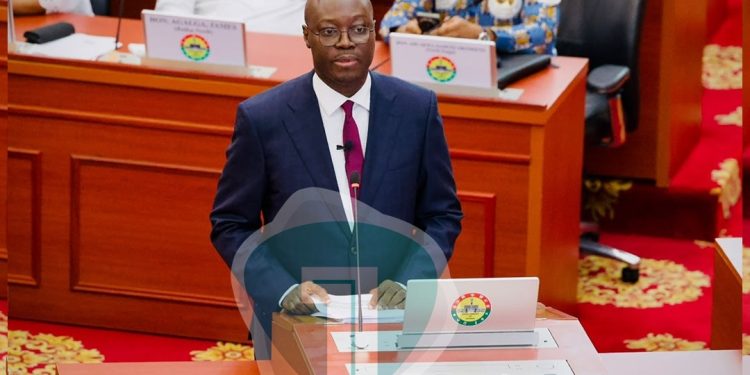
The government will invest US$200 million in a 24-month nuclear power readiness programme as part of plans to develop a fully state-owned nuclear power plant, Finance Minister Dr Cassiel Ato Forson has announced. During the presentation of the 2027 Budget Statement and Economic Policy in Parliament on Thursday, November 12, 2026, Dr. Forson announced that the program would run from January 2027 to December 2028.
The government aims to complete essential preparations and sign an engineering, procurement, construction, and financing contract by the end of 2028. He emphasised that achieving nuclear readiness by 2028 does not imply that the country will begin generating nuclear electricity in that year.
“Nuclear power readiness in 2028 does not mean nuclear power generation in 2028. It means that site suitability, technology selection, environmental assessment, financing, licensing preparation, safeguards, emergency planning, and safety case have reached the standard where we can sign a contract,” he said.
Dr Forson stated that the nuclear facility would remain a strategic national asset, wholly owned by the government, while international partners would contribute the necessary technology, funding, engineering expertise and specialised services. He added that the government intends to train more than 2,000 scientists to build the technical capacity needed to sustain the programme.
The Finance Minister explained that the nuclear power project was part of a broader national agenda to enhance energy security and guarantee a dependable supply of baseload electricity to meet Ghana’s long-term energy requirements.
He also cited the construction of the Akosombo Dam under Ghana’s first President, Dr Kwame Nkrumah, as a testament to the importance of long-term energy investments in driving national development. “For years, we have spoken about developing a nuclear power plant. The time has come to turn that ambition into action,” he said.
Dr Forson further said the government would work to reduce the cost of power generation from about 16 US cents per kilowatt-hour to 8 US cents or less, arguing that cheaper electricity would lower production costs and improve the competitiveness of Ghanaian businesses.# He added that investments in power generation, transmission and distribution would help address the annual US$1.4 billion energy-sector shortfall currently covered with taxpayers’ money

