

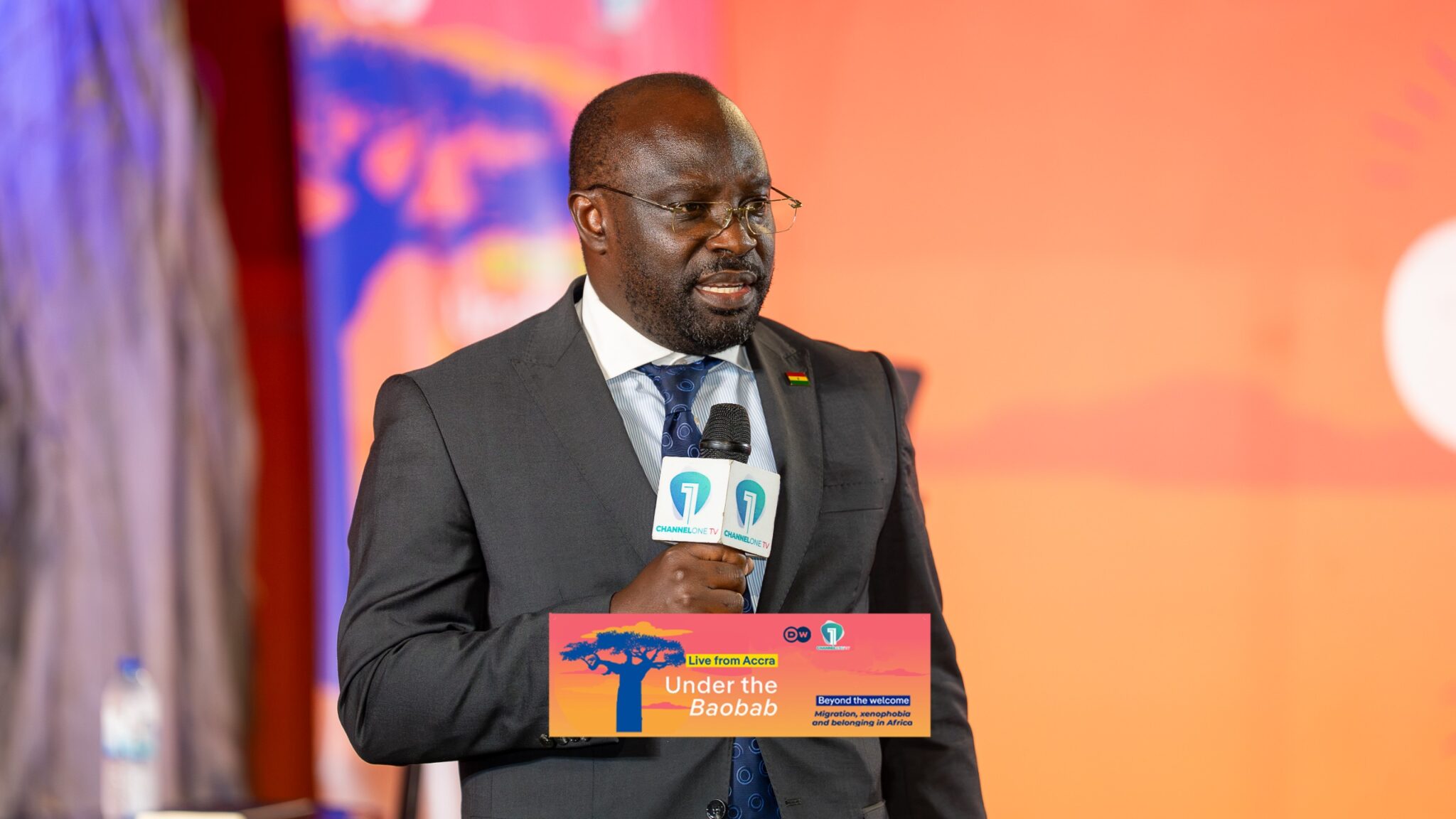
The Coordinating Director for Political and Economic Affairs at the Ministry of Foreign Affairs, Ambassador Harold Adlai Agyeman, has called on the media to take the lead in challenging narratives that blame migrants for Africa’s socio-economic challenges. According to him, the media has a critical role to play in confronting the use of public fears and frustrations surrounding migration to fuel xenophobic sentiments and create divisions among Africans.
Speaking at the official launch of DW’s “Under the Baobab” programme in Africa, in collaboration with Channel One TV, in Accra on Thursday, October 1, Ambassador Agyeman stressed the importance of responsible media coverage in promoting integration and correcting misconceptions about migration. He said efforts must be made to challenge narratives that portray foreigners and migrants as the source of society’s problems.
“When you see the fears and frustrations of people being instrumentalised and used to create a certain feeling that the foreigner, the migrant, is the problem, this is something that all of us have a responsibility to speak out against. And I’m happy that the media here are leading this charge,” he said. Ambassador Agyeman further urged the media and the public to collectively reject attempts to blame migrants for social and economic challenges.
“Where the foreigner is pointed to and used to blame for the ills or the inadequacies of society, we have a responsibility to ensure that we respond collectively against that,” he added. He argued that migration should not be portrayed as the cause of challenges such as unemployment and inadequate public services. Instead, he said, stronger integration and cooperation among African countries could help create new opportunities for economic growth and employment.
The Ambassador also encouraged the media to counter anti-migrant narratives with facts while highlighting Africa’s shared history and the contribution of migration to the continent’s development.
“For those who want to distract us by using the migrants as an easy target and using the migrants as the person that can be blamed, we should respond to them with facts, and we should respond to them with the moral authority of the collective legacy that migration has brought into our lives as a people,” he said.
Ambassador Agyeman emphasised that migration has been a fundamental aspect of Africa’s history, and he argued that efforts to restrict the movement of Africans contradict the continent’s historical experience. He stated that discussions on migration, xenophobia, and the sense of belonging are crucial and timely, especially as African nations strive for greater integration.
“Migration is not the issue,” he stressed, urging Africans to collectively challenge the tendency to blame foreigners for societal problems. He also noted that the media can play a significant role in fostering a stronger sense of African identity and belonging by creating platforms for dialogue and ensuring that diverse perspectives are represented.
Ambassador Agyeman commended the DW Africa team for organising the “Under the Baobab” dialogue and highlighted the importance of addressing migration, xenophobia, and belonging as key issues in Africa’s development trajectory. Additionally, he expressed gratitude to the management and staff of Channel One TV for partnering with DW to host the program in Ghana.

