

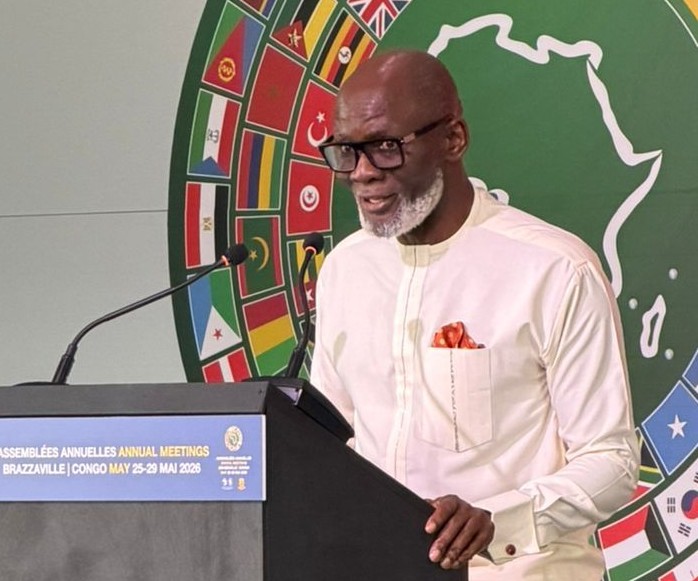
Ghana should leverage its anticipated leadership of the African Union (AU) in 2027 to drive the realisation of a functional African single market, according to Africa Prosperity Network founder and Executive Chairman, Gabby Asare Otchere-Darko. Speaking during an X Space discussion on October 11 under the theme “Ghana’s BRICS Bid: What Does It Mean for Ghana and Africa?”, Otchere-Darko said Ghana is uniquely positioned to advance continental economic integration, given its role as host of the African Continental Free Trade Area (AfCFTA) Secretariat and President John Dramani Mahama’s expected assumption of the AU chairmanship.
He argued that Ghana’s international economic strategy should not focus solely on joining emerging global blocs such as BRICS but should also prioritize strengthening intra-African trade and accelerating implementation of the AfCFTA. According to him, Ghana’s expected AU leadership presents a rare opportunity to transform long-standing commitments to African integration into tangible economic outcomes.
“What is it that we will do, or that we are planning strategically to do, to push with greater agency this intra-African arrangement that we have, which is a single market under the auspices of the AfCFTA?” he asked. Otchere-Darko noted that Africa’s population of approximately 1.5 billion represents a vast market capable of attracting investment and supporting industrial growth. However, he said the continent’s economic potential continues to be limited by fragmented national markets and persistent barriers to cross-border trade.
Drawing comparisons with India and China, he argued that large, integrated markets have been instrumental in driving manufacturing and economic expansion. He therefore urged African governments to strengthen coordination, dismantle trade obstacles, and create a more seamless operating environment for businesses across the continent. While the 1991 Abuja Treaty laid out a roadmap for deeper regional integration, including the establishment of a continental customs union and eventually an African central bank, Otchere-Darko lamented the slow pace of implementation.
“Look, they have signed all the treaties. They have signed all the protocols, but it is not happening,” he said. He called on African heads of state, central bank governors, regulators, and private-sector leaders to move beyond commitments on paper and take concrete action to advance the continent’s single-market agenda.
African capital
Otchere-Darko highlighted that Africa’s pension funds and other savings exceed $4 trillion. However, he noted that regulatory restrictions and fragmented markets hinder the ability to invest these resources across the continent. He argued that a more integrated market could enhance the deployment of African capital and create opportunities for businesses to expand beyond their domestic economies.
Ghana, he suggested, should leverage its role as the host of the AfCFTA Secretariat in Accra to take the lead in efforts to promote deeper intra-African trade. Additionally, Ghana’s 70th independence anniversary in March 2027 will align with Mahama’s anticipated chairmanship of the African Union, presenting an opportunity to renew political commitment to the integration agenda. Otchere-Darko emphasised that Ghana’s leadership should be gauged by tangible progress in facilitating trade and strengthening the private sector, rather than merely by participation in summits and international groups.
BRICS membership
Ghana’s bid to engage with BRICS has sparked a discussion about its potential economic and diplomatic benefits. Otchere-Darko emphasised that while membership could present advantages, it should not divert the country’s focus from its continental priorities. He pointed out that the BRICS grouping includes countries with significant geopolitical differences, suggesting that Ghana could develop relationships with emerging economies without compromising its other international partnerships.
He also recommended that Ghana examine South Africa’s experience in BRICS to better understand the practical benefits of membership regarding trade, investment, and industrial development. Furthermore, Otchere-Darko stated that a more pressing issue for Ghana is how to strengthen its position within the African Continental Free Trade Area (AfCFTA) and contribute to the long-standing goal of a more integrated African economy.
Recalling a 2007 African Union debate on the proposed United States of Africa, he noted that the continent had missed an opportunity to accelerate political and economic integration. He cited former Libyan leader Muammar Gaddafi’s advocacy for a united Africa as an example of the political commitment necessary to advance continental integration. Otchere-Darko concluded that Ghana should leverage its anticipated leadership role in the African Union (AU) to advocate for concrete measures that would enable African businesses to trade more freely and benefit from the continent’s collective market.

