
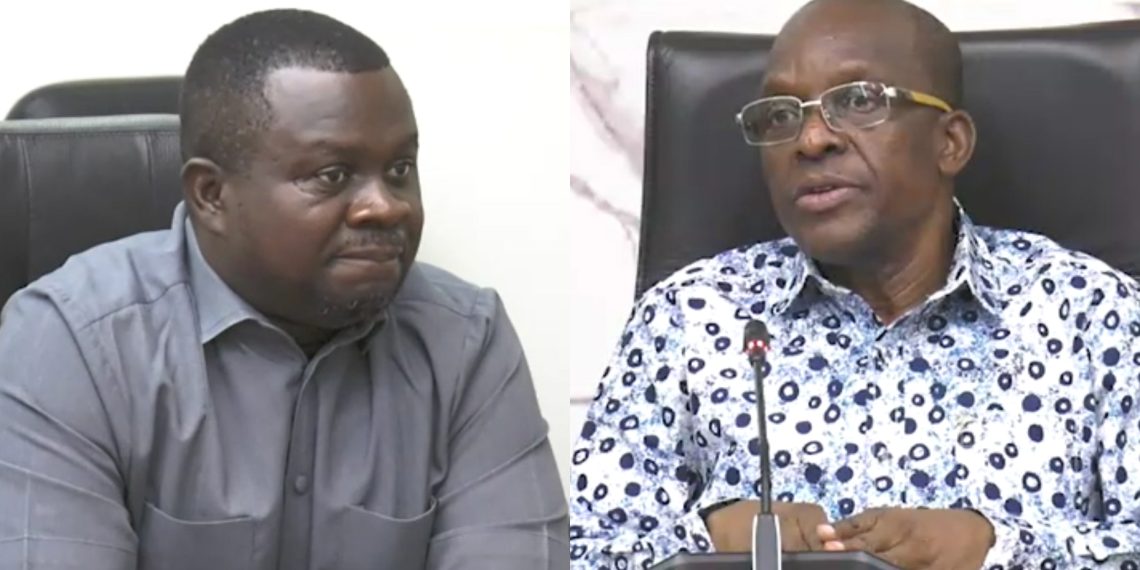
The Ghana Journalists Association (GJA), in collaboration with Speaker of Parliament Alban Bagbin, is working towards the introduction of a Private Member’s Bill aimed at improving journalists’ working conditions and economic welfare in Ghana. The proposed legislation is expected to establish minimum conditions of service for journalists while strengthening media independence by reducing their financial dependence on the individuals and institutions they are tasked with covering.
Speaking during a courtesy call on the Speaker ahead of the 30th GJA Awards, the Association’s President, Albert Kwabena Dwumfuor, said the initiative was intended to address the economic difficulties confronting media practitioners and help improve Ghana’s performance on the World Press Freedom Index.
“We are ready to partner in sponsoring that private members’ bill to look at an improved working conditions for journalists,” he said, emphasising the need for legislation to enhance the financial well-being of the media industry. Mr Dwumfuor noted that Ghana’s declining position on the press freedom index was linked not only to physical attacks against journalists but also to their economic circumstances. He explained that journalists’ financial welfare had become a factor in the index’s assessment since 2019.
He expressed optimism that improving the economic conditions of media practitioners would help Ghana regain its standing, recalling that the country had previously ranked among Africa’s top three performers. Speaker Alban Bagbin welcomed the proposal and pledged his readiness to spearhead efforts in Parliament to secure the passage of legislation guaranteeing journalists basic conditions of service.
He maintained that journalists required adequate financial support to carry out their watchdog responsibilities independently, without having to rely on the very individuals and institutions they were expected to scrutinise.
“So we are more than ready and willing to lead, to make sure that we pass legislation to ensure that anybody going to have any of those institutions of learning, in journalism, all the fields, give at least some basic conditions of service that can let you survive without relying on the same people that you are going to scrutinise to support you,” Mr Bagbin said.
The Speaker also drew comparisons with Parliament’s oversight functions, observing that parliamentary committees faced funding challenges and sometimes depended on state institutions they were mandated to scrutinise for sponsorship. He called for a more equitable distribution of national resources to ensure that key institutions, including the media and Parliament, received sufficient funding to discharge their respective responsibilities effectively.

