
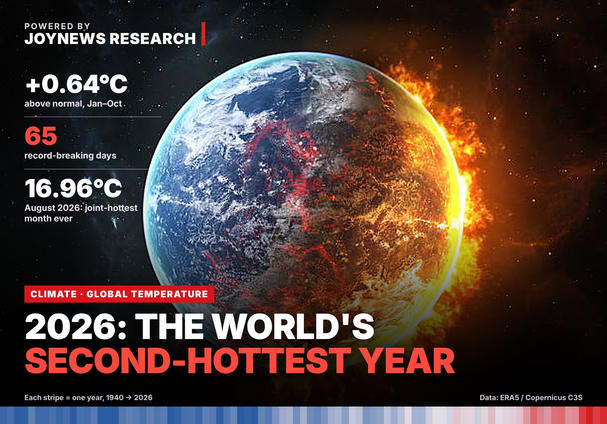
Government Statistician Dr. Alhassan Iddrisu has cautioned that Ghana’s inflation outlook could face renewed pressure from an anticipated strong El Niño weather event, which could disrupt agricultural production, electricity generation and global supply chains. He warned that changing rainfall patterns and rising temperatures associated with the weather phenomenon could negatively affect food production, reduce supply and push prices upwards, potentially undermining the progress made in containing inflation.
Speaking at the release of Ghana’s October 2026 inflation figures, which recorded an increase to 5.5%, Dr. Iddrisu called on policymakers to factor weather forecasts into economic planning and implement preventive measures to minimise the potential impact on the economy. He emphasised the need for early intervention to ensure that weather-related disruptions do not translate into higher living and operating costs for households and businesses.
According to him, below-average rainfall during the farming season could affect crop yields and reduce food availability, creating upward pressure on food prices. “If, for example, it affects rainfall and we don’t get enough rain, that’s likely to affect food supply and all other things being equal. If there are shortages in food supply, that can affect food prices,” he cautioned.
Dr. Iddrisu also identified electricity generation as another potential source of inflationary pressure, explaining that Ghana’s reliance on hydropower exposes the energy sector to fluctuations in rainfall. He noted that reduced rainfall could affect water inflows into the Akosombo Dam and other reservoirs, potentially reducing electricity generation and disrupting business activities.
Such disruptions, he explained, could increase production costs for businesses, some of which may pass the additional expenses on to consumers through higher prices. He further pointed out that electricity is a component of the Consumer Price Index (CPI), making developments in the energy sector significant to the country’s overall inflation outlook.
Beyond domestic challenges, the Government Statistician warned that El Niño could also disrupt international supply chains, particularly in countries that export food and other essential commodities to Ghana. He explained that weather-related production difficulties in parts of Asia and other trading regions could increase import costs and intensify domestic inflationary pressures.
Cocoa was another commodity he identified as particularly vulnerable to the anticipated weather conditions, warning that production disruptions could have implications for global cocoa prices. “And I must also say that usually it affects cocoa a lot. And when it affects cocoa, it affects cocoa prices,” he added. His concerns follow a warning by the Ghana Meteorological Agency about a developing very strong El Niño event, which could have significant implications for rainfall patterns, agriculture, water resources and hydropower generation.
The agency has identified November 2026 to April 2027 as the critical period during which Ghana could experience the effects of the phenomenon. Dr. Iddrisu urged policymakers to take the meteorological projections seriously and integrate them into economic forecasts to guide the timely introduction of appropriate interventions.
“The most important thing is that we should recognize that this has been forecasted by Meteo and then we have to take the projections or forecasts and feed them into the analysis that we do,” he said. He stressed that proactive planning would be essential to limiting the potential effects of El Niño on food security, electricity supply and the overall cost of living.

