
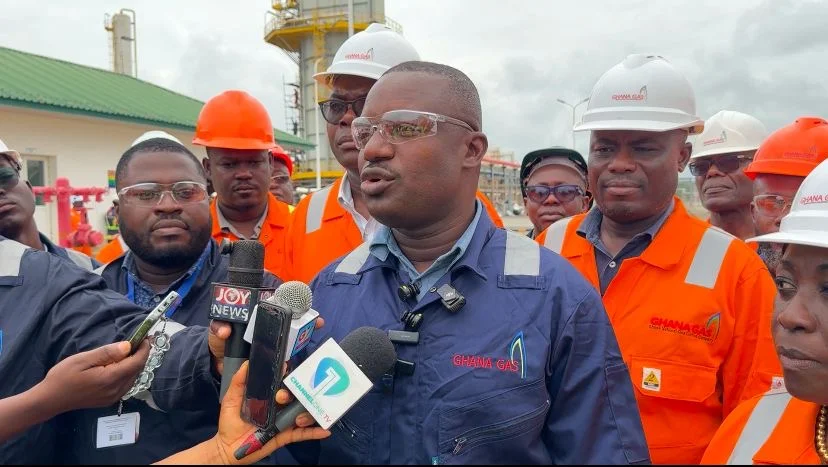
The Minister for Energy and Green Transition, John Jinapor, has acknowledged recent interruptions in electricity supply across parts of the country, attributing them to extreme weather conditions and technical faults affecting gas infrastructure and transmission lines. He has, however, dismissed suggestions that the country is experiencing load shedding, assuring consumers that the challenges were temporary and that measures were being implemented to restore stable electricity supply.
Speaking at the 10th Ghana Energy Awards on Friday, November 27, 2026, Dr Jinapor described the past week as particularly challenging for the energy sector, citing a combination of operational difficulties that affected power generation and transmission. He identified excessive heat conditions associated with the El Niño phenomenon, alongside a technical fault at the country’s gas infrastructure, as key factors responsible for the recent disruptions.
“You would have realised that we are experiencing some excess heat because of the El Niño and, to compound issues, we had a small challenge at our gas infrastructure,” he said. According to the Minister, the fault affected backup pumps at the gas facility, necessitating emergency interventions and the replacement of defective equipment before operations could be scaled up.
He commended the management team involved in resolving the challenge, noting that the process was complicated by the time required to procure and install specialised equipment. Dr Jinapor also revealed that an incident involving illegal chainsaw operators, who allegedly cut down a tree that fell onto a transmission line in the Kumasi area, contributed to the recent electricity supply interruptions.
He confirmed that the transmission line fault had since been rectified and appealed to consumers to remain patient as engineers work to address the few remaining isolated disruptions. “I can confidently say that as we speak we are not shedding load. There are a few pockets, but we are addressing them,” he stated.
The Minister further disclosed that the government inherited an electricity generation deficit of approximately 700 megawatts, with several power plants having fallen behind on their scheduled maintenance programmes. He said ongoing rehabilitation and maintenance works were helping to restore several generating units to full operation, including the KTPP.
Dr Jinapor expressed optimism that the interventions would improve the reliability of electricity supply and strengthen the country’s capacity to prevent temporary technical challenges from escalating into a major power crisis.

