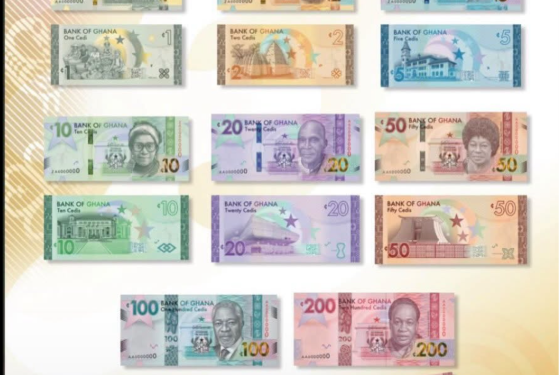
The Bank of Ghana’s newly introduced Heritage Series banknotes showcase eight distinguished Ghanaian personalities, historical landmarks and traditional symbols that reflect the nation’s rich history, cultural heritage and contributions to national development.
Unveiled by President John Dramani Mahama on Thursday, November 12, 2026, the eight denominations celebrate different aspects of Ghanaian society, including commerce, religious diversity, education, justice, culture, freedom, international peace and national sovereignty.
Each denomination features a unique design, incorporating notable personalities and cultural symbols that represent significant events, institutions and values that have helped shape Ghana’s identity.
Speaking at the unveiling ceremony, President Mahama said the historical figures, landmarks and cultural elements featured on the notes would make Ghana’s history more accessible to younger generations while strengthening their understanding and appreciation of the country’s heritage.
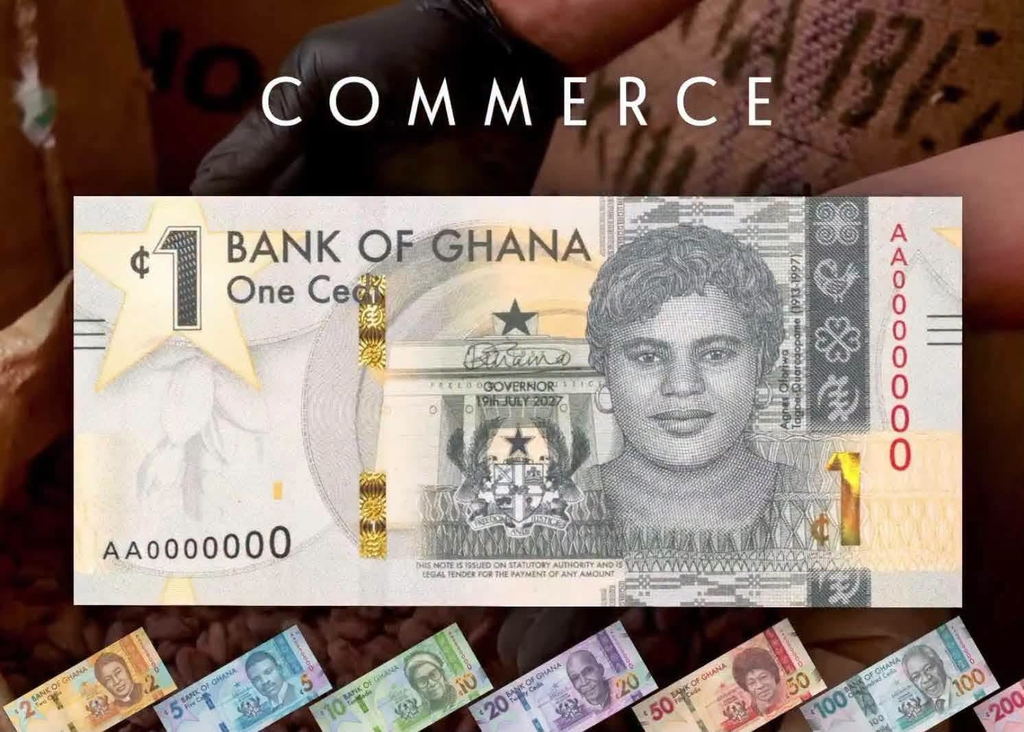
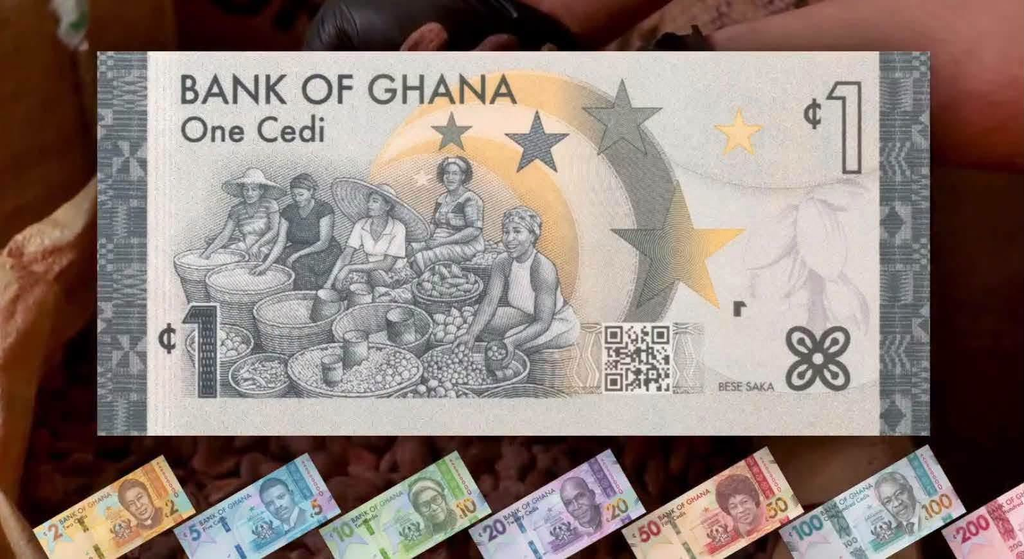
The GH¢1 note celebrates Ghana’s commercial history and the important role women have played in economic development. It features Agnes Oforiwa Tagoe-Quarcoopome, recognised for her contributions to the independence struggle and her place in Ghana’s banking history. On the reverse are market women at Makola Market, accompanied by the Adinkra symbol Bɛsɛ saka, which signifies abundance, prosperity and unity.
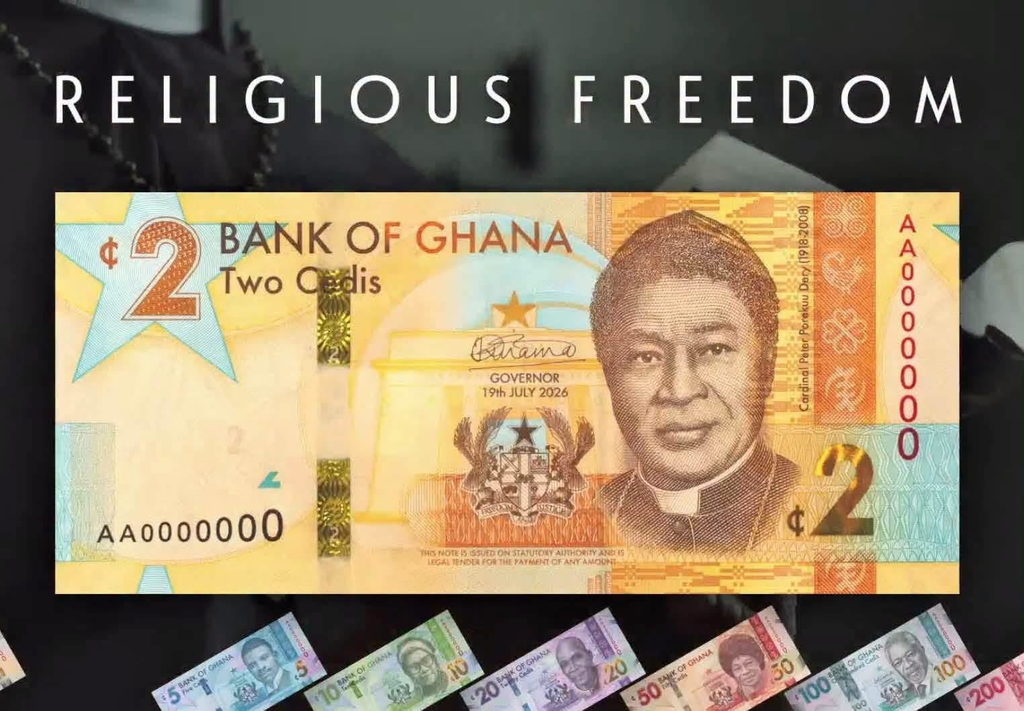
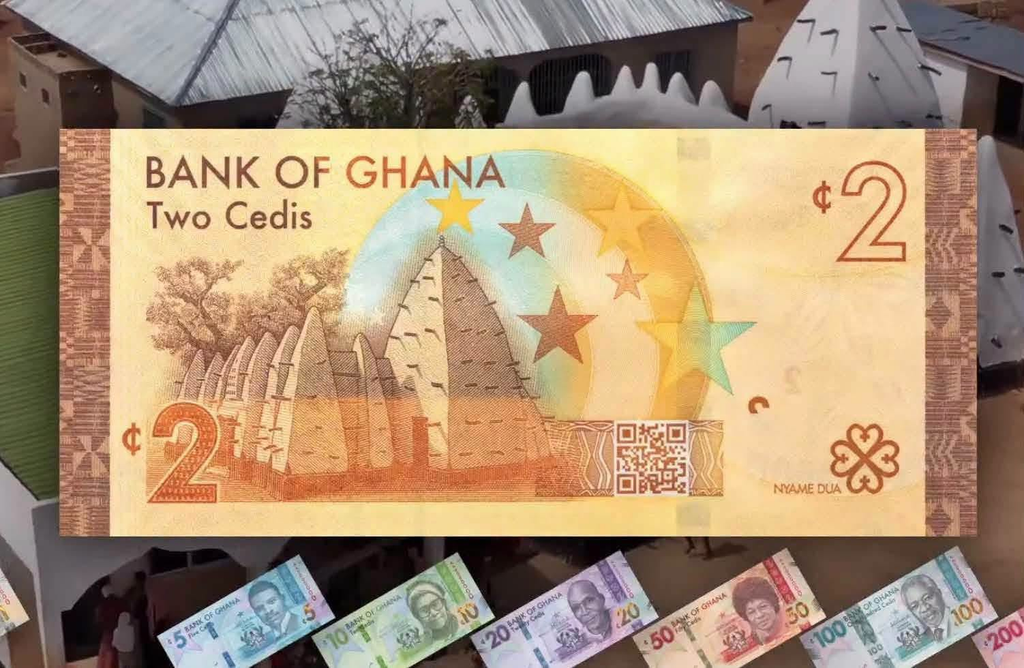
The GH¢2 note highlights religious diversity and peaceful coexistence. It bears the portrait of the late Cardinal Peter Porekuu Dery, a prominent figure in the Catholic Church. The reverse features the Larabanga Mosque, considered Ghana’s oldest mosque. Also incorporated is the Nyame Dua symbol, which reflects indigenous Ghanaian spirituality and reinforces the importance of religious tolerance, freedom of worship and peaceful coexistence.
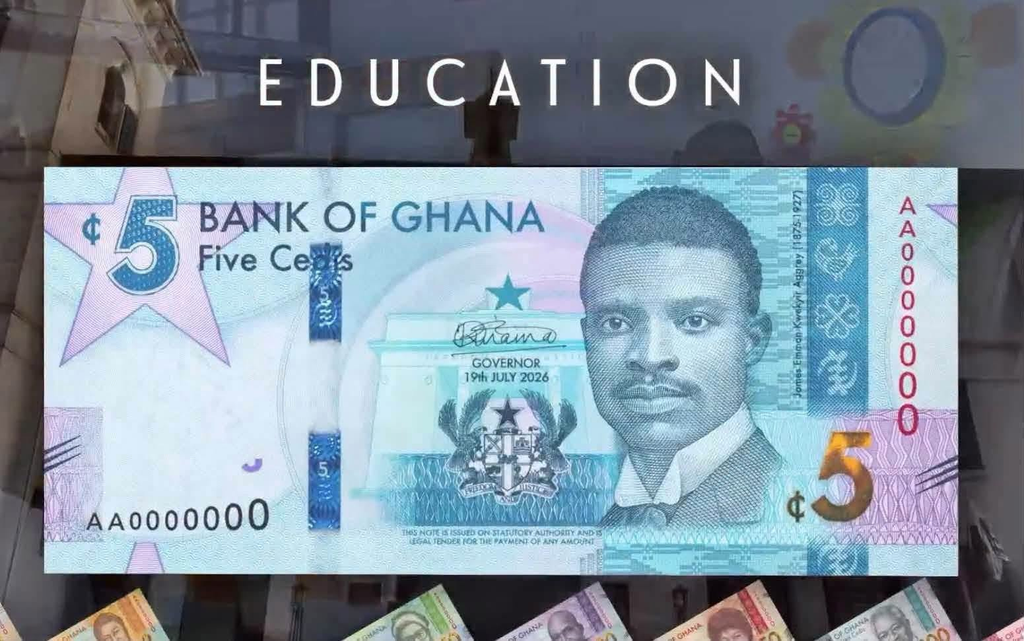
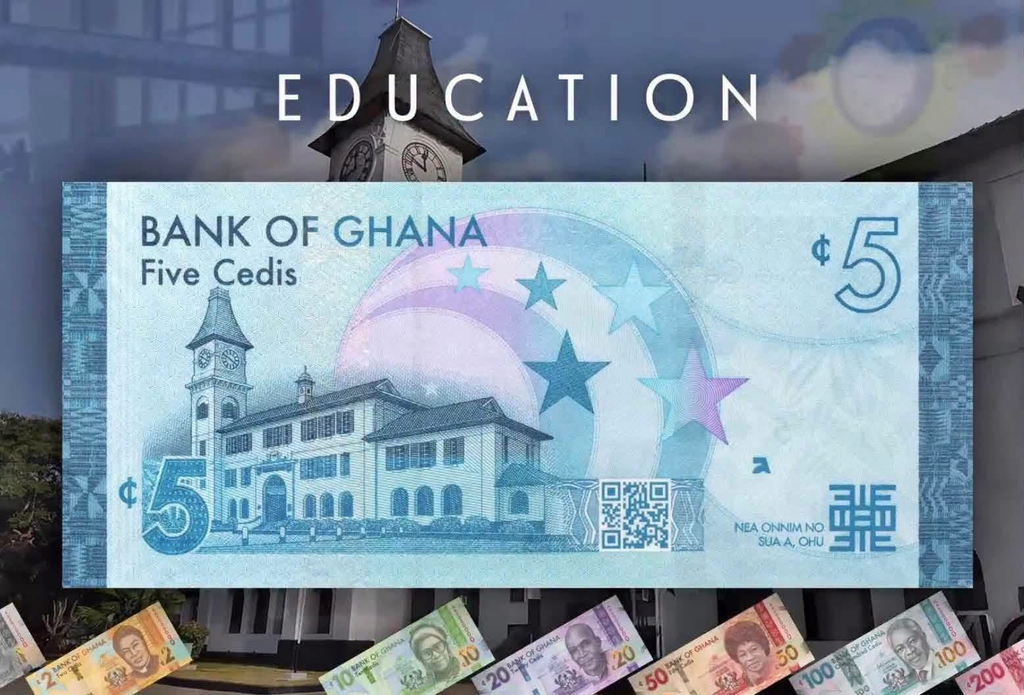
Education and the pursuit of knowledge are the defining themes of the GH¢5 note, which honours renowned educationist James Emmanuel Kwegyir-Aggrey. Achimota School appears on the reverse, alongside the Adinkra symbol Nea Onnim No Sua A, Ohu, which underscores the value of learning, knowledge and wisdom. The design also draws attention to the importance of equal educational opportunities for both girls and boys.
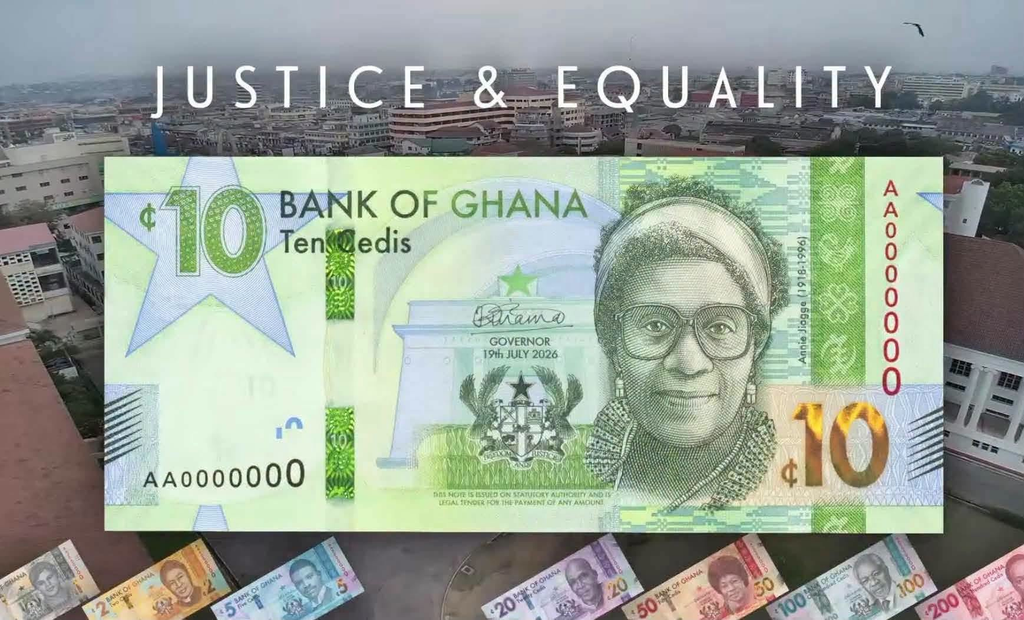
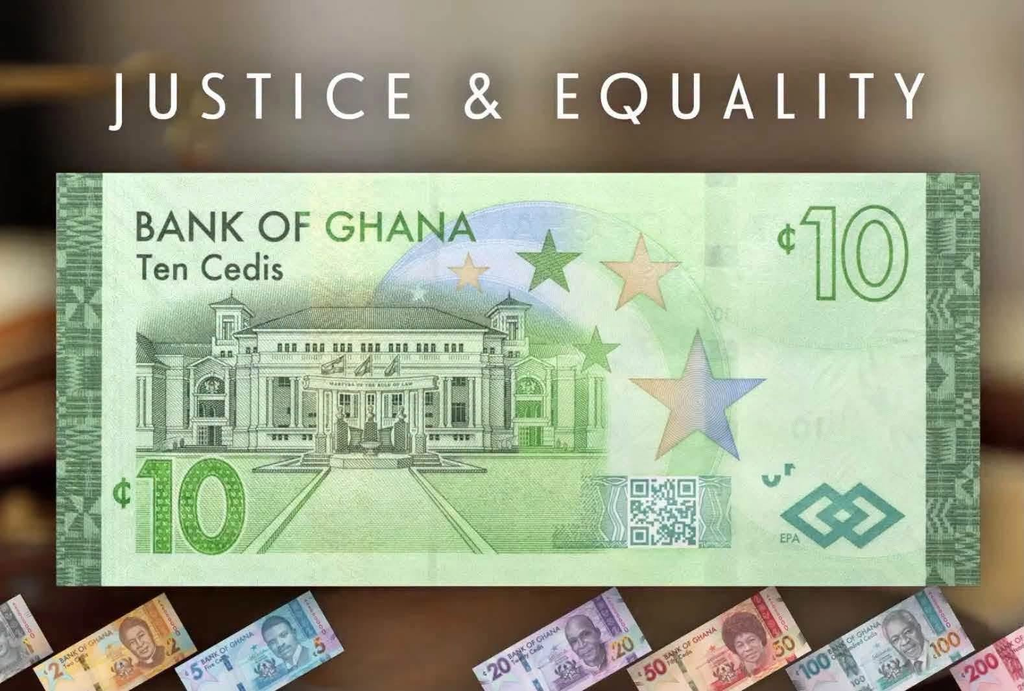
The GH¢10 note recognises women’s contributions to justice and the promotion of equality through the portrait of Justice Annie Jiagge. It incorporates the Adinkra symbol Epa, representing law and justice, and highlighting the principles of fairness, equal opportunity and respect for citizens’ rights. The Supreme Court building is featured on the reverse side.
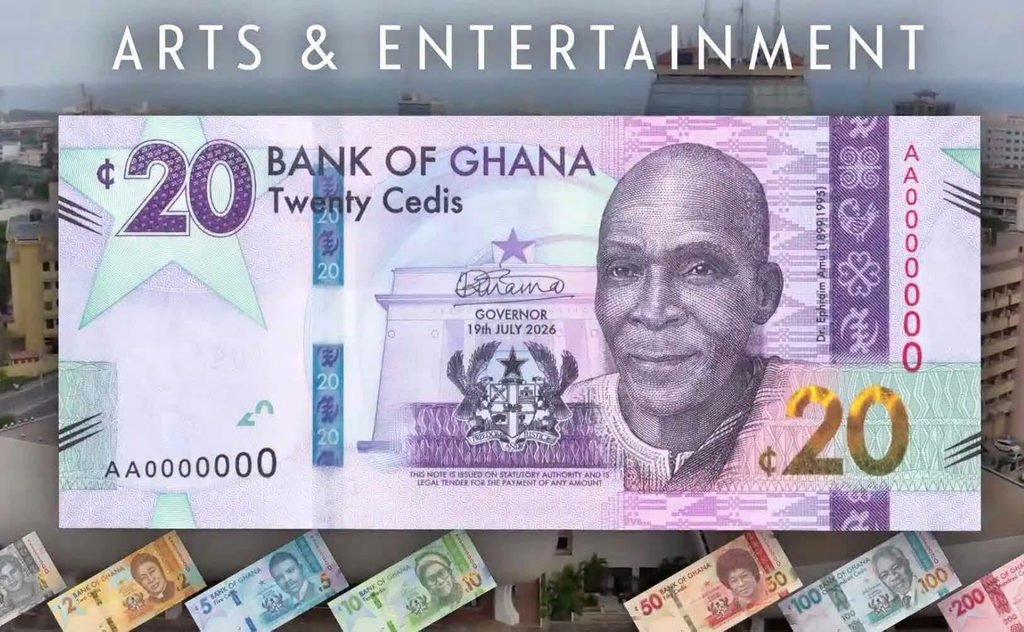
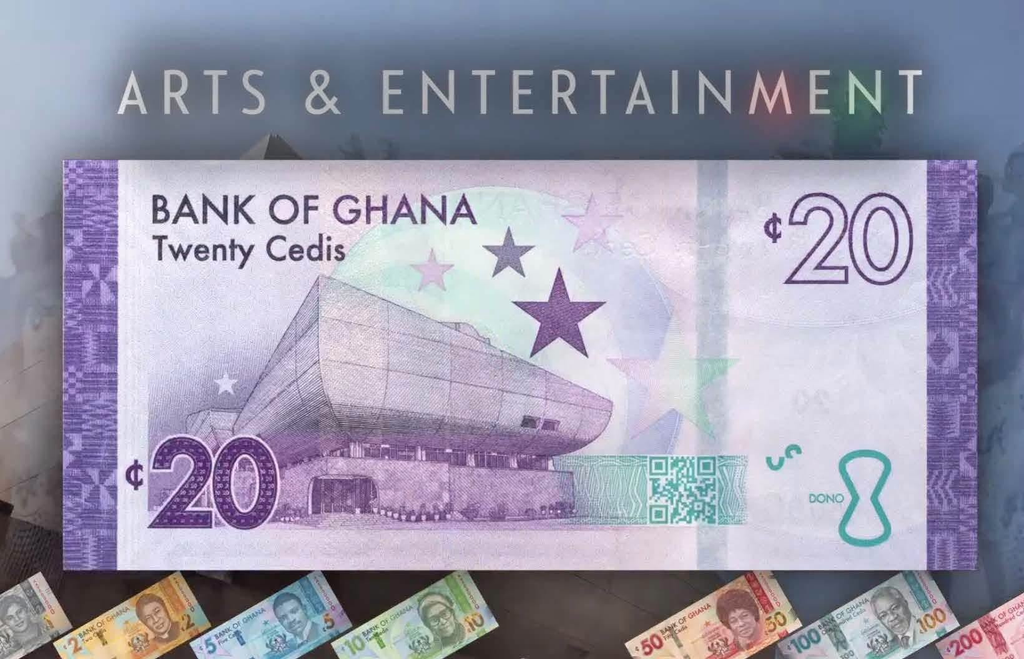
The GH¢20 note celebrates Ghana’s artistic and cultural heritage through the image of Dr. Ephraim Amu, whose influence on music and cultural expression remains an important part of the country’s history. Drawing inspiration from the traditional talking drum, the note features the Adinkra symbol Dono, connecting music, rhythm and performance with the preservation of Ghanaian traditions. The National Theatre appears on the reverse.
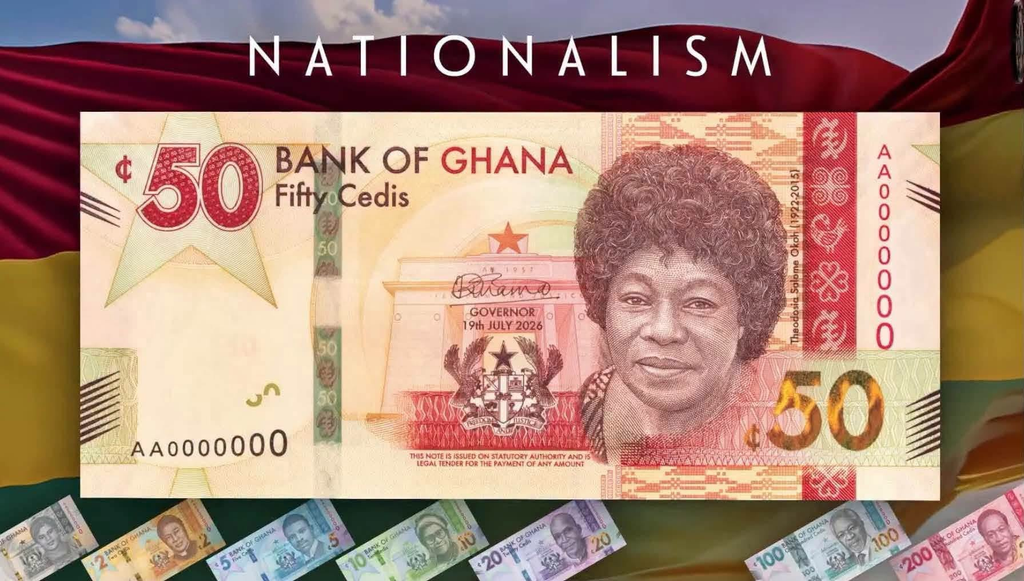
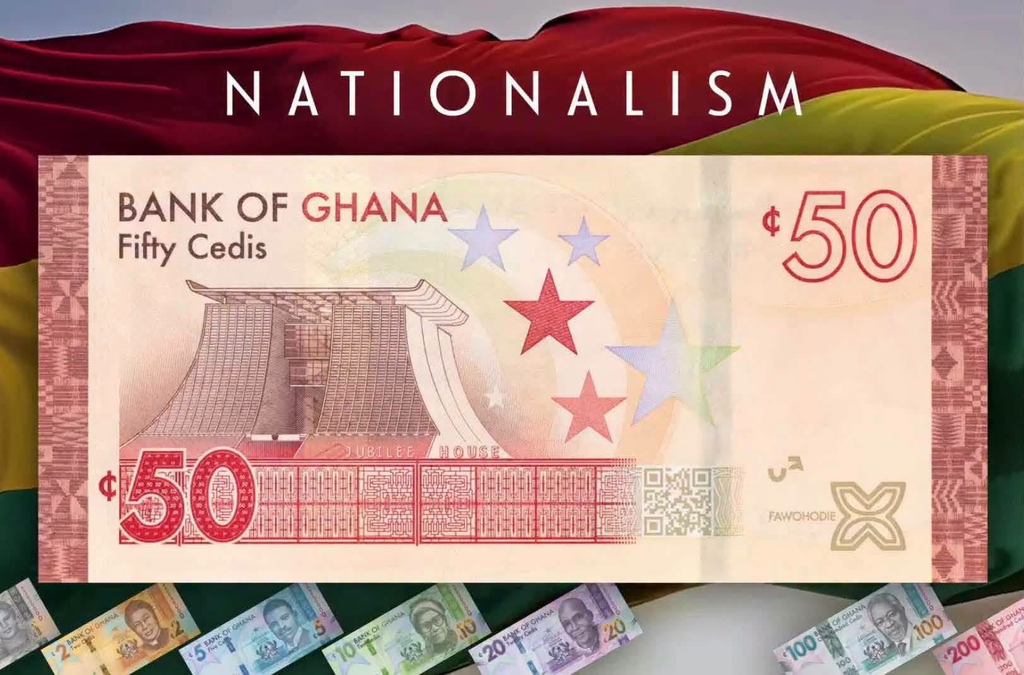
The GH¢50 note is dedicated to national identity, freedom and self-determination. It honours Theodosia Salome Okoh, the designer of Ghana’s national flag, whose portrait features on the front. The Adinkra symbol Fawohodie, which represents freedom and independence, is also incorporated, while Jubilee House is depicted on the reverse.
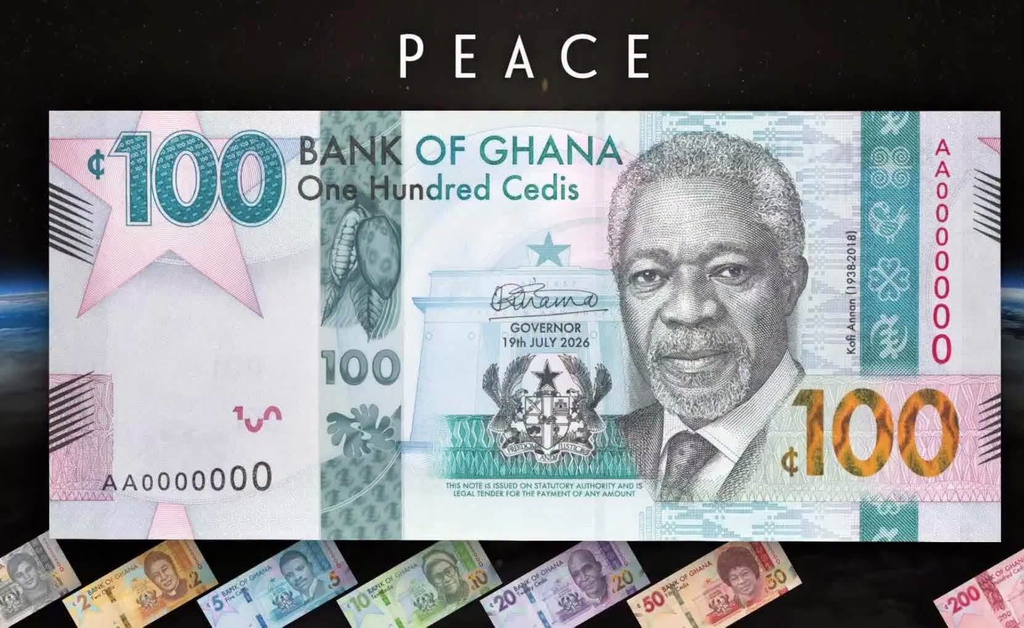
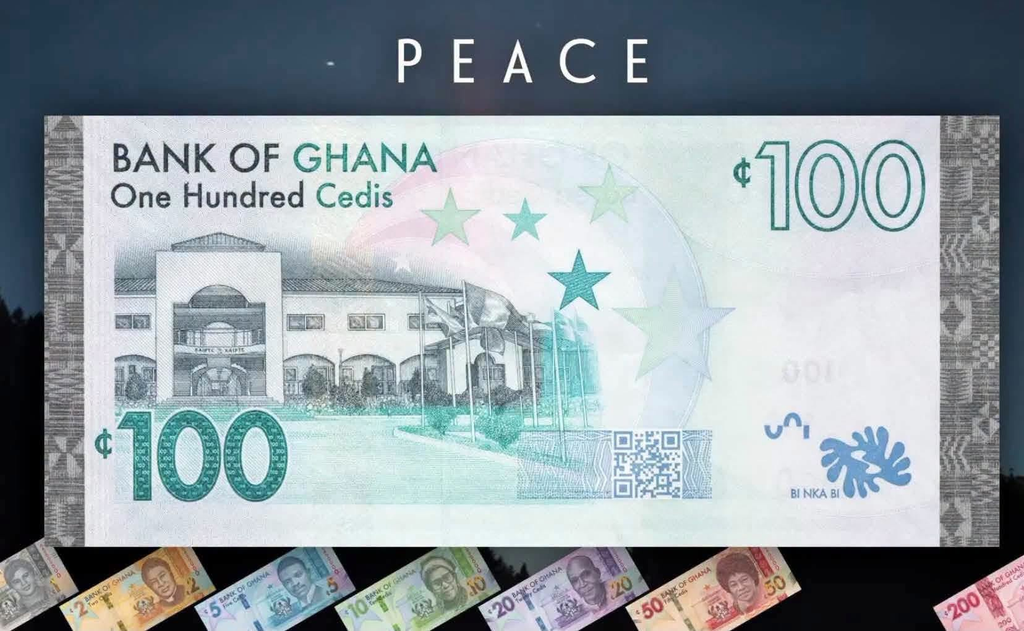
Ghana’s contributions to global peace and diplomacy take centre stage on the GH¢100 note, which features former United Nations Secretary-General Kofi Annan. The reverse showcases the Kofi Annan International Peacekeeping Training Centre, while the Adinkra symbol Bi Nka Bi represents peaceful coexistence and discourages conflict. Together, these elements highlight Ghana’s commitment to international cooperation and peacekeeping initiatives.
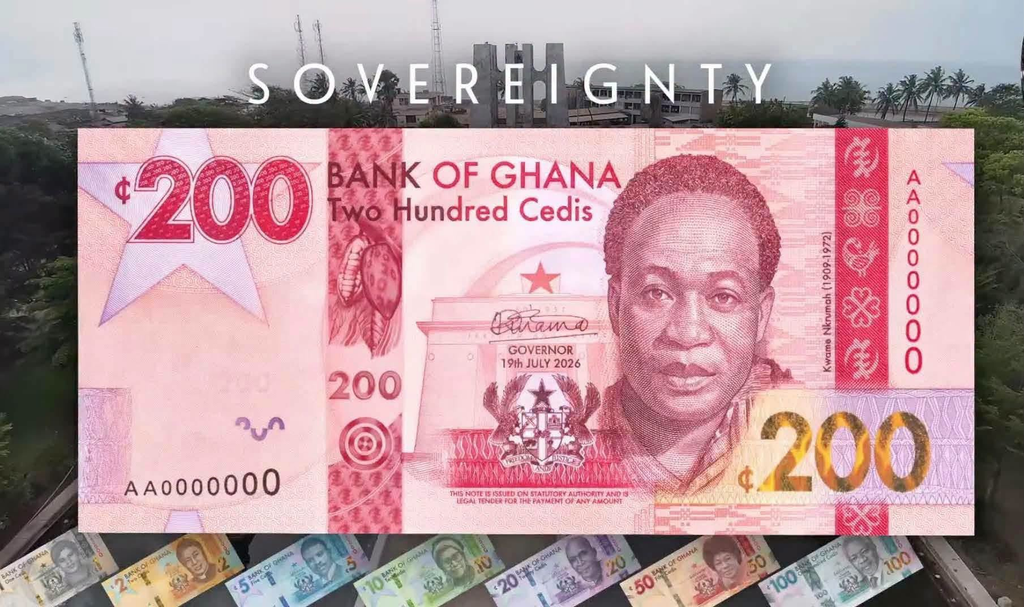
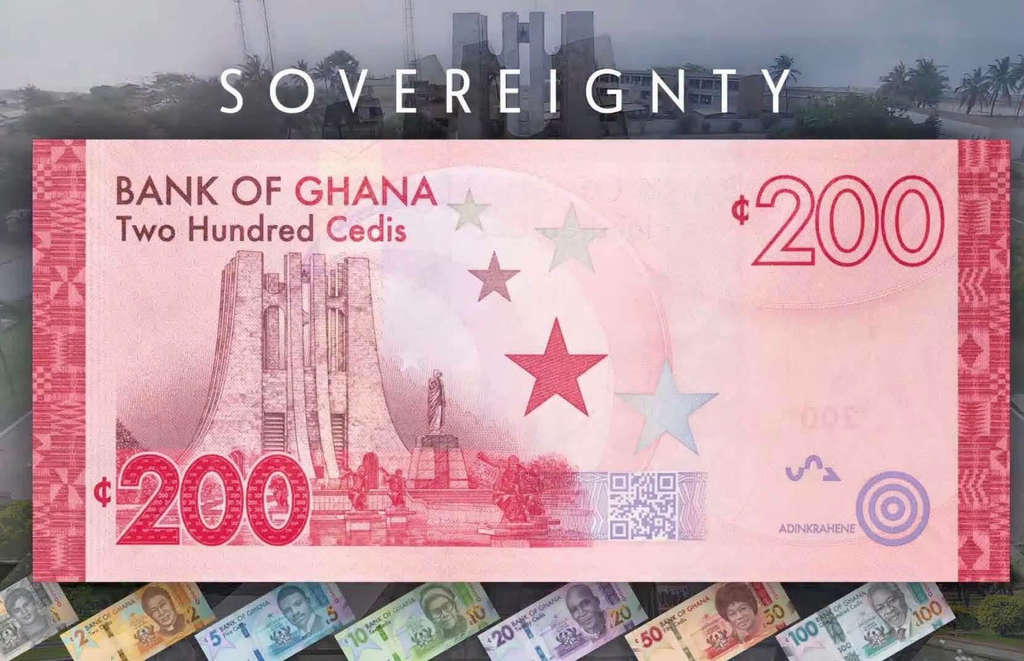
The GH¢200 note, the highest denomination in the Heritage Series, pays tribute to Ghana’s first President, Dr. Kwame Nkrumah, whose leadership played a pivotal role in securing the country’s independence in 1957. The note features the Adinkra symbol Adinkrahene, associated with leadership, authority and greatness, reflecting the ideals of national sovereignty and self-determination. The Kwame Nkrumah Mausoleum completes the design on the reverse side.