
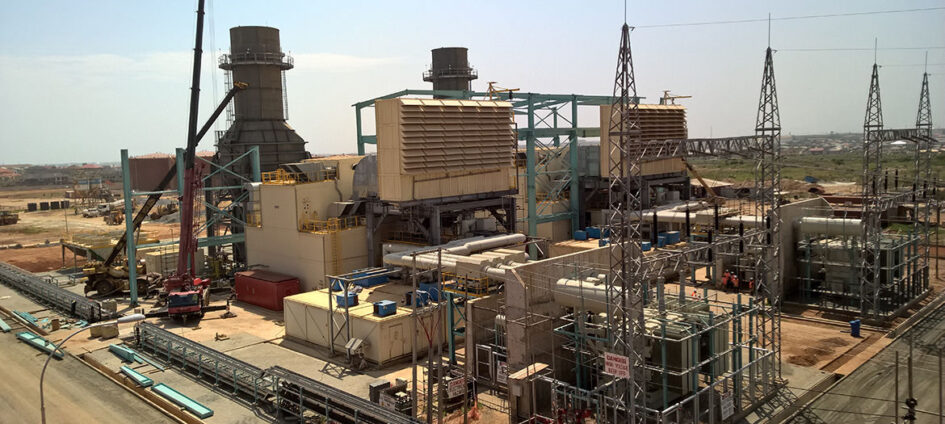
The government has announced plans to significantly increase Ghana’s electricity generation capacity through the construction of a 1,450-megawatt thermal power plant and a 600MW solar facility, both of which will be fully owned by the state. The projects are expected to strengthen electricity supply to households and businesses, support industrial growth and reduce the country’s reliance on expensive emergency power arrangements. Finance Minister Dr Cassiel Ato Forson disclosed the plans during an interview on JoyNews’ PM Express on Thursday, November 12, 2026.
He said construction of the thermal power plant at Ekafudzidzi in the Central Region is expected to commence in December 2026, adding that the government intends to fund the project without borrowing. Dr Forson explained that the 1,450MW facility would be developed in two phases, with the first 600MW expected to be available by the fourth quarter of 2028, while the remaining 850MW is scheduled for completion by the third quarter of 2030.
“We are going to ensure that we have our own power plant. We are building a 1,450-megawatt thermal power plant. The president will cut short in December, before the year ends. We expect that the first 600 megawatts will be available by the third quarter, by the fourth quarter of 2028 and the second 850 megawatts will be available by the third quarter of 2030. That will mean that, by that time, we can phase out what we call emergency power. Aside from that, we want to also diversify our power needs,” he said.
The minister indicated that the thermal facility would require approximately 150 million standard cubic feet of natural gas daily to operate at full capacity, with supplies expected from the Sankofa and Jubilee fields. In addition to the thermal plant, the government plans to develop a 600MW solar power facility supported by a battery energy storage system with a capacity of 2,000 megawatt-hours.
The battery system is expected to address the intermittent nature of solar power by storing excess electricity generated during the day for use during periods of increased demand, particularly at peak hours. It is also expected to improve the stability and reliability of electricity supply across the national grid.
Dr Forson said the additional generation capacity would provide the energy needed to expand energy-intensive industries, including bauxite and manganese processing, steel manufacturing, cement production and agro-processing. He stressed that Ghana’s ambition to transform its industrial sector would be difficult to achieve without a reliable and affordable electricity supply.
“Energy capacity is economic capacity. It powers growth, jobs, and prosperity,” he stated. The government is targeting December 2030 to completely phase out emergency power plants, with the two proposed facilities expected to provide sufficient electricity generation capacity to reduce dependence on costly temporary power arrangements.
US$500m for transmission upgrades
Beyond increasing electricity generation, the government plans to invest US$500 million between 2027 and 2030 to strengthen the transmission network and reduce power losses. The investment will cover improvements to the north-south transmission corridor, connections between new power plants and major consumption centres, and infrastructure to support electricity trading with neighbouring countries.
It will also provide reliable power connections to strategic industrial zones expected to drive the country’s manufacturing and processing ambitions. On the distribution side, Dr Forson announced plans to install two million prepaid meters as part of efforts to tackle losses and improve revenue collection within the electricity system.
The government is also targeting the full implementation of performance-based private sector participation in electricity distribution by the end of 2027. The measures, according to the Finance Minister, are designed to improve the efficiency of the power sector, strengthen supply reliability and provide the energy base required for industrial expansion and the government’s 24-hour economy initiative.

