

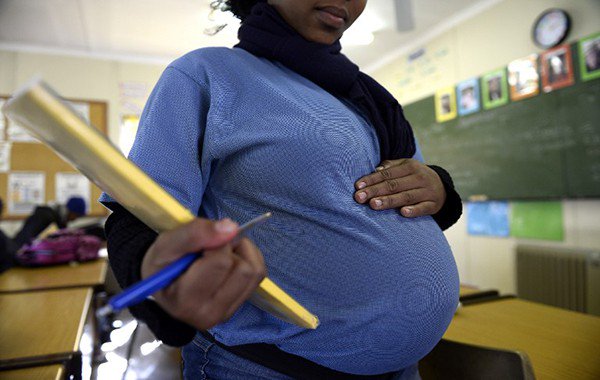
Parents must pay closer attention to their children and create a safe environment where they can openly discuss their challenges, founder of the Protect Our Future Foundation, Susana Anutiga Nablisi, has advised. According to Ms Nablisi, inadequate parental supervision is increasingly exposing young girls to relationships and lifestyles that may eventually lead to teenage pregnancy.
She noted that some parents are so occupied with work and other responsibilities that they fail to notice changes in their children’s behaviour or ask questions about items their daughters bring home. “A girl goes out, brings something to the house and the parents ask, they don’t even care. They don’t even ask, where did you get this from? How did you get this?” she said.
Ms Nablisi made the remarks on Metro TV’s Good Afternoon Ghana during a discussion on teenage pregnancy in the country. Her comments come against the backdrop of Ghana Health Service figures indicating that more than 53,000 adolescent pregnancies were recorded between January and July 2026. The figure includes 1,501 pregnancies involving girls aged between 10 and 14.
In the Upper East Region, where the Protect Our Future Foundation operates, more than 2,400 adolescent pregnancies were recorded during the first five months of 2026, with the Bongo District alone accounting for 520 cases. Ms Nablisi acknowledged that economic hardship contributes to teenage pregnancy in some communities. However, based on her organisation’s direct engagement with young people, she said parental supervision and communication also require urgent attention.
She observed that some teenagers receive expensive mobile phones, clothing and other items without their parents taking the time to ask how they obtained them, stressing the need for parents to take a more active role in understanding their children’s lives and challenges.
“Some of them are like, I’m tired, I want to sleep. That time is not like our time that you are not like, or speak to your children, create an environment where your daughters can talk to you, can open up to you,” she said.
She believes parents must become more deliberate about talking to their children, particularly girls, about relationships, abuse, peer pressure and the consequences of early sexual activity. Ms Nablisi said her organisation has therefore started engaging not only students but also mothers in communities.
Through its marketplace engagements, she said, the foundation speaks to women about paying greater attention to their children and creating opportunities for them to communicate openly at home. She said the organisation’s school engagements have also shown that many girls do not fully understand the consequences of teenage pregnancy until they become pregnant.
Ms. Nablisi noted that many young people fail to recognise the risks associated with early sexual activity until they are faced with the consequences. “Unfortunately, they often do not realise the impact until it happens. What may seem like harmless fun at first can quickly expose them to the realities and consequences of their actions,” she said.
She explained that teenage pregnancy can significantly disrupt a girl’s education, forcing many to leave school temporarily before eventually returning after childbirth. She added that stigma and fear of judgment often discourage pregnant teenagers from seeking support, leading some to remain isolated at home.
Through its outreach programmes, the Protect Our Future Foundation has been working with schools and communities to address teenage pregnancy, promote menstrual hygiene, develop leadership skills and provide practical training opportunities for young people.
The organisation is also preparing for the second edition of its She Can Conference, slated for October 10, 2026, at the GNAT Hall in Bolgatanga. The event is expected to bring together about 300 boys and girls, offering them the opportunity to engage with accomplished women who will share their experiences and inspire them to prioritise education and pursue their long-term aspirations.
According to Ms. Nablisi, addressing teenage pregnancy requires a collective effort involving parents, schools, traditional leaders and the wider community, rather than placing the burden solely on young people. “This issue extends beyond individual families. It affects entire communities and has broader implications for the nation as a whole,” she said.

