

Ghana Water Limited has been ordered to pay US$235 million to the Spanish-owned company behind the idle Teshie desalination plant, with the Republic of Ghana liable for the amount under a state guarantee issued for the project.
Spanish group Cox announced the development on Monday, saying two final awards from the International Chamber of Commerce (ICC) arbitration court were issued on 17 September and served on its Ghanaian project company the following day.
According to Cox, the US$235 million award, net of taxes, covers payments arising from the termination of the water purchase agreement under which Ghana Water bought treated seawater from the plant. Interest will accrue on the amount from 1 April 2026 until full payment.
The company said the arbitration tribunals substantially rejected counterclaims brought against its subsidiary, Befesa Desalination Developments Ghana Limited, including a US$144.5 million claim. Ghana Water was also ordered to reimburse part of the subsidiary’s legal costs.
The awards further established that the Republic of Ghana is responsible for the amounts under the state guarantee attached to the project. However, Cox said the company cannot recover the same sums twice.
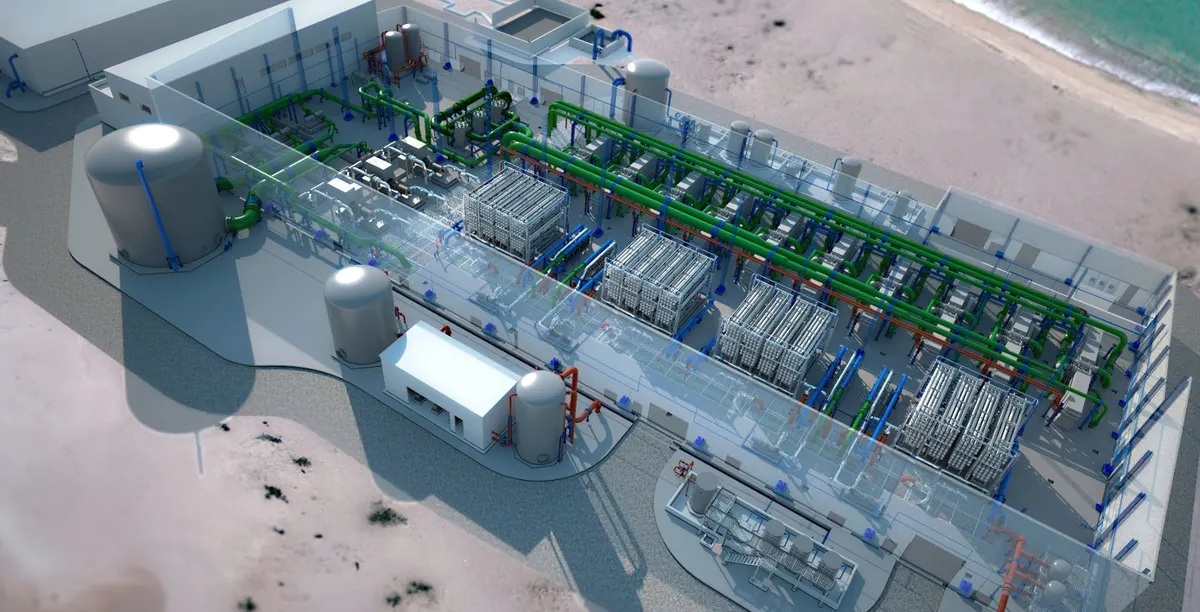
The dispute centres on the Teshie-Nungua desalination plant, which has been idle since October last year after Ghana Water shut it down over what it described as unresolved contractual issues and a prolonged lack of the maintenance required to operate the facility safely.
Since then, residents in Teshie, Nungua, Spintex, parts of Sakumono and La have faced water rationing. Households have increasingly relied on water tankers, while local assemblies have drilled boreholes. National Security has also supplied water by tanker to Tsuibleoo following a TV3 campaign.
In February, President John Mahama directed the Finance Minister, the Attorney-General and Ghana Water to begin negotiations with the plant’s shareholders.
“We are pushing hard to resolve this once and for all, so the plant can resume operations and supply water to Teshie, Nungua, Sakumono, Spintex, La Dadekotokpon, and surrounding areas,” Ghana Water Managing Director Adam Mutawakilu said at the time. He added that an initial round of negotiations had taken place, with a second meeting scheduled for 19 February.
The financial imbalance at the heart of the dispute has been public for years. Ghana Water was paying GH¢6.75 per unit for desalinated water, while the Public Utilities Regulatory Commission’s approved tariff allowed the utility to sell the water at GH¢1.47 per unit. That left Ghana Water with a reported loss of GH¢5.28 on every unit purchased, according to Graphic Online in January.
Ghana Water first shut down the plant on New Year’s Day in 2018, saying it intended to renegotiate the terms of the agreement. Its then Head of Communications, Stanley Martey, said operating the facility had become too expensive and was draining the utility’s limited resources.
The US$126 million plant was commissioned by then-President John Mahama in 2015 during his first term. It was designed to produce 60,000 cubic metres of water a day for up to 500,000 residents in the Teshie-Nungua catchment under a 25-year build-own-operate-transfer arrangement.
The World Bank’s Multilateral Investment Guarantee Agency (MIGA), which provided US$179.2 million in cover for the project in 2012, identifies the project company as a joint venture involving Abengoa Water Investments Ghana, Daye Water Investment and local partner Hydrocol.
Cox, chaired by Enrique Riquelme, acquired the assets of the collapsed Spanish engineering group Abengoa in 2023 and now owns 95 per cent of the Ghanaian project company.
Cox has cautioned investors that the amounts awarded are gross figures recognised within the project’s financing structure and do not translate directly into cash for the group. The company said the ultimate financial impact will depend on the amount actually recovered, the rights of third parties and the applicable accounting treatment.
Cox described the awards as final and binding, subject to the challenge procedures available under the applicable law.
The case adds to a series of costly international arbitration claims involving the Ghanaian state. In January 2025, Ghana lost a US$320 million arbitration dispute with Tullow Oil over a tax assessment. In 2024, former Attorney-General Godfred Dame warned that arbitration claims potentially reaching US$9 billion could pose a serious threat to the economy without urgent reforms to the country’s arbitration laws.
Ghana Water Limited is named in the arbitration awards under its former corporate name, Ghana Water Company Limited.

