
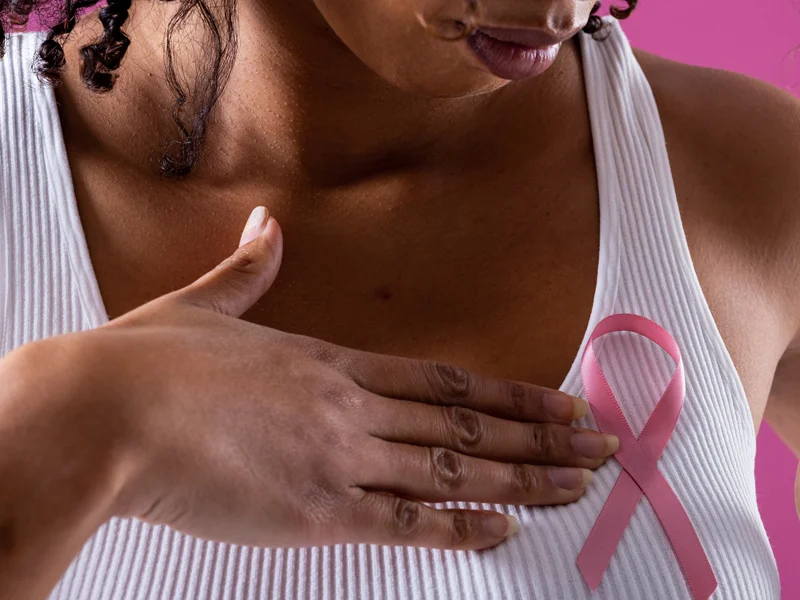
Every October, breast cancer awareness advocates reiterate a crucial message: early detection can make the disease treatable, yet fear, stigma and misinformation continue to prevent many women from seeking medical care until the condition has advanced. More than 4,000 breast cancer cases are recorded in Ghana annually, with limited public awareness and inadequate screening and treatment facilities contributing to the growing burden, according to the Chief Executive Officer of Breast Care International (BCI), Dr Beatrice Wiafe Addai. Breast cancer accounts for 31.8 per cent of all cancer cases in the country.
BCI estimates that breast cancer has claimed at least 2,300 lives annually since 2020, out of approximately 5,000 diagnosed cases each year. The organisation also reports that about 8,000 patients died between 2021 and 2024 after presenting at health facilities at an advanced stage of the disease. Dr Wiafe Addai, who also founded Peace and Love Hospitals, says the majority of breast cancer patients in Ghana seek medical attention when the disease has already progressed to an advanced stage.
Globally, the World Health Organisation (WHO) estimates that approximately 2.3 million women were diagnosed with breast cancer in 2022, while 670,000 died from the disease. Survival rates vary significantly across income groups. In high-income countries, about 83 per cent of women diagnosed with breast cancer survive, whereas more than half of patients in low-income countries die from the disease. The International Agency for Research on Cancer, an agency of the WHO, projects that annual breast cancer cases worldwide could rise to 3.2 million, with 1.1 million deaths, by 2050 if current trends persist.
Myth: Breast size
Health experts have debunked the myth that breast size determines a woman’s risk of developing breast cancer. According to specialists, having large breasts does not increase the likelihood of the disease, just as having small breasts does not provide protection. Breast cancer occurs when cells in the breast grow uncontrollably. Key risk factors include advancing age, a family history of the disease, inherited genetic mutations such as BRCA1 and BRCA2, obesity, alcohol consumption, and physical inactivity. While larger breasts contain more breast tissue, size alone is not a risk factor. Experts therefore urge all women, regardless of breast size, to perform regular self-breast examinations, attend routine screening appointments, and seek medical attention promptly if they notice any unusual changes.
“It is spiritual”
Campaigners say one of the most harmful misconceptions about breast cancer is the belief that it is caused by witchcraft or evil spirits. According to Dr. Wiafe Addai, this superstition has contributed to the deaths of many Ghanaian women by delaying proper medical treatment. She urges women to seek professional healthcare immediately when they notice unusual changes in their breasts. Dr. Wiafe Addai also expressed concern about the reliance on herbal remedies, noting that many women who discover breast lumps first turn to prayer camps or herbalists instead of visiting hospitals. She emphasised that the Food and Drugs Authority (FDA) has not approved any herbal product or practitioner as a cure for cancer, and encouraged patients to seek evidence-based medical care.
“Sucking the breast lowers a woman’s risk”
Another claim that circulates on social media is that men who suck a woman’s breasts can reduce her chances of developing the disease. Health professionals say there is no evidence for it. Dr Wiafe Addai said the claim was untrue and cautioned men to handle the breast with care rather than squeeze it.
What does help is breastfeeding a baby.
Gifty Atampugbire of the University of Ghana Medical Centre says it is breastfeeding, not casual sucking, that reduces the risk.
“Once treated, it cannot return”
Many survivors believe that finishing treatment means the disease is gone for good. In reality, breast cancer can come back, either in the same breast or elsewhere in the body, sometimes years later.
“It is a women’s disease”
Breast cancer is far more common in women, but not exclusive to them. WHO says 0.5 to one per cent of cases occur in men. Dr Wiafe Addai puts the figure in Ghana at one to three per cent. Dr Charles Arhinful of the VRA Hospital at Aboadze, says it is rare but has encouraged men to screen themselves.
“Only women with risk factors are in danger”
WHO says roughly half of all breast cancers occur in women with no known risk factor other than being female and getting older. Dr Wiafe Addai’s advice is to keep a healthy weight, stay physically active and limit alcohol, while checking the breasts regularly.
The cost of silence
Stigma does not only delay diagnosis; it can break families. The President of the Peace and Love Breast Cancer Survivors,Vivian Sarfo, has urge men not to desert wives who develop the disease but to support them through treatment. Dr Wiafe Addai believes fear and stigma make many women reluctant to be tested until it is too late.
Treatment, however, works best early.
She says that when the disease is detected early, the tumour can be removed and the breast preserved. Benedicta Agbono, a seven-year survivor, credits early detection with saving her life. For campaigners, the message is simple: examine your breasts, report changes and go to a hospital, not a shrine.

