

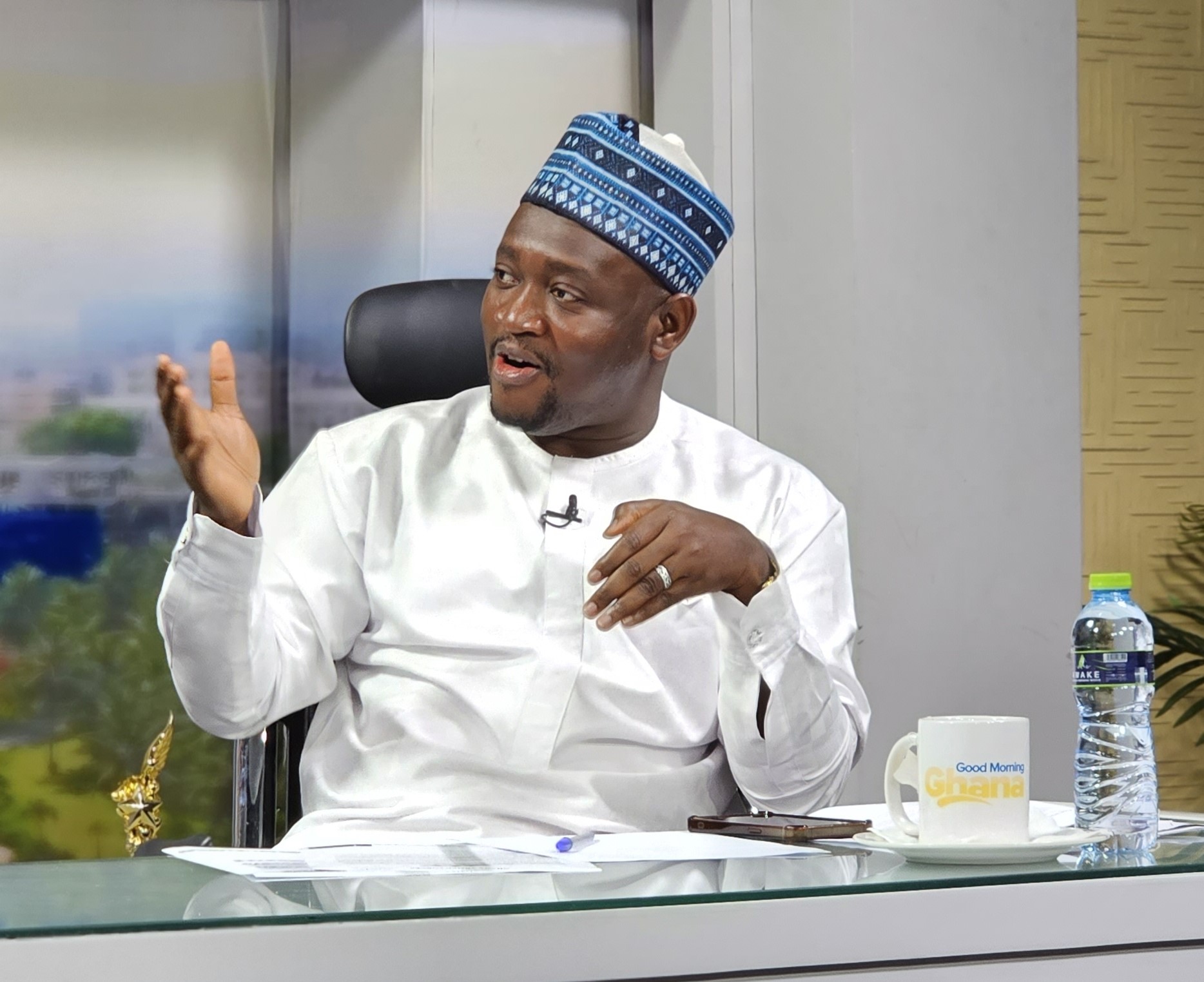
Deputy Minister for Roads and Highways, Alhassan Suhuyini, has dismissed suggestions that freedom of speech in Ghana is being curtailed, contending instead that authorities are increasingly focused on addressing irresponsible speech and conduct. His remarks come in the wake of the arrest and two-week remand of Salomey Awity Baffoe, a senior nursing officer accused of assisting the individual police have identified as the operator of the controversial “Ghana Jollof” TikTok account, known for its criticism of government officials.
Speaking on Eyewitness News on Friday, September 18, 2026, Suhuyini emphasised the need to distinguish between legitimate criticism, which he described as a longstanding feature of Ghana’s democratic and media environment, and actions or statements that breach professional or legal standards. “Free speech is not under attack. What may come under scrutiny is irresponsible speech. But as for free speech itself, I do not see it being threatened,” he stated.
The Deputy Minister argued that journalists and media practitioners should not automatically interpret legal action taken against individuals for their conduct or utterances as an infringement on freedom of expression.
“If a person uses access to a media platform to engage in conduct that is clearly irresponsible and is subsequently held accountable, that should not be conflated with an attack on free speech,” he said.
Drawing on his experience as a former journalist, Suhuyini noted that Ghana’s media landscape has traditionally provided ample room for robust criticism of governments and public officials, adding that accountability for irresponsible conduct should not be mistaken for the suppression of dissenting views.
He cited journalists including Kweku Baako Jr., Kwesi Pratt Jr. and Professor Kofi Karikari, whom he said were critical of the Jerry Rawlings administration and influenced his own decision to pursue journalism.
Robust and critical commentary has always been a feature of Ghana’s media landscape and has generally not been suppressed,” Suhuyini stated. While acknowledging that there have been periods when media freedom faced challenges, including the closure of some media outlets due to their perceived political leanings, he emphasised the importance of upholding the country’s laws.
“Are there laws in this country or not?” he questioned.
According to Suhuyini, when an individual is arrested and charged under an existing law, it is the responsibility of the courts to determine whether the alleged conduct constitutes a violation. He noted that once charges have been brought and evidence presented, the burden shifts to the individual’s legal team to demonstrate that the conduct in question does not breach the law.
“If a law exists, a charge has been filed, and there is evidence relating to a particular act, then it is up to the person’s lawyers to prove that the act does not contravene the law,” he explained.
The Deputy Minister insisted that arrests or prosecutions should not automatically be interpreted as evidence that freedom of expression is under threat. He maintained that neither the media nor free speech is currently under attack in Ghana.
“I do not believe the media is under attack, nor do I think freedom of expression is being curtailed,” Suhuyini said. “What I see is increased scrutiny of irresponsible statements and conduct within the media space.

