

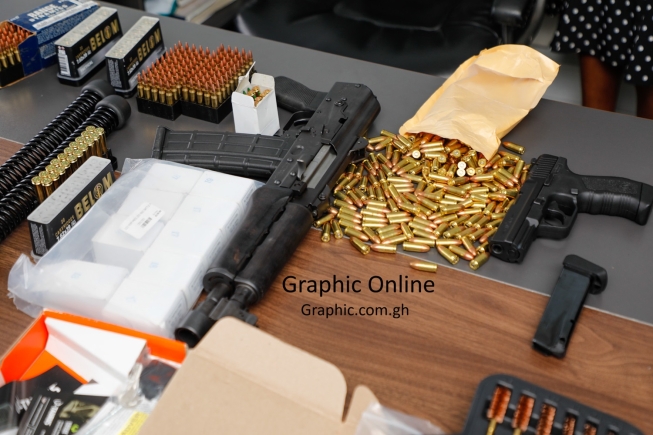
An assault rifle, two pistols and 610 rounds of ammunition concealed among personal effects from the United States have been intercepted by Customs officials at the Golden Jubilee Terminal of the Tema Port. The weapons and ammunition were discovered during an intensified inspection of goods entering Ghana. The consignment, which had been presented as personal effects, was subjected to further examination by two Customs officers at about 5:15 p.m. on Friday, September 25, 2026.
The officers uncovered three firearms—an assault rifle and two pistols—alongside the 610 rounds of ammunition and other related accessories. None of the firearms, ammunition or accessories had been declared to Customs. The seizure has renewed attention on the movement of restricted items through Ghana’s ports. The Customs Division of the Ghana Revenue Authority (GRA) said it had intensified the scanning and physical examination of consignments as part of efforts to detect and prevent illegal imports.
Further examination
Speaking to the press on Monday, September 28, the Deputy Commissioner for Communications and Public Affairs at the Ghana Revenue Authority (GRA), Florence Asante, said the interception was part of intensified scanning and examination of goods at the country’s ports of entry and exit.
She said the measures were aimed at preventing the illegal importation of prohibited and restricted items. According to her, the firearms and ammunition had not been declared by the importer as part of the consignment and were discovered only after Customs officials conducted a more thorough examination.
Ms Asante said the seized items had since been handed over to the Police for further action. She stressed the need for importers to comply with the laws governing the importation of restricted and prohibited goods, urging those seeking to bring such items into the country to obtain the necessary licences and permits and make full and accurate declarations to Customs.
Warning to importers
Ms Asante cautioned importers who receive or accept consignments on behalf of other people to establish exactly what the goods contain before bringing them into the country. She urged importers to ensure that any restricted goods they bring into Ghana are covered by the necessary permits and are accurately declared to Customs. She also advised them to exercise due diligence when accepting consignments from third parties to avoid unknowingly becoming involved in the illegal importation of restricted items.
“Make sure that you have a licence to import those items and make sure you declare them correctly so that you will not fall foul of the law,” she said. She stressed that claiming ignorance of the contents of a consignment would not necessarily exempt an importer from liability for breaches of the law.
Ms Asante further explained that Ghana’s customs regime classifies arms and ammunition as restricted goods, meaning importers are required to obtain a permit from the Ministry of the Interior before bringing them into the country. She added that the Arms and Ammunition Act, 1972 (NRCD 9), as amended, also requires prior authorisation for the importation or exportation of firearms and ammunition.

