
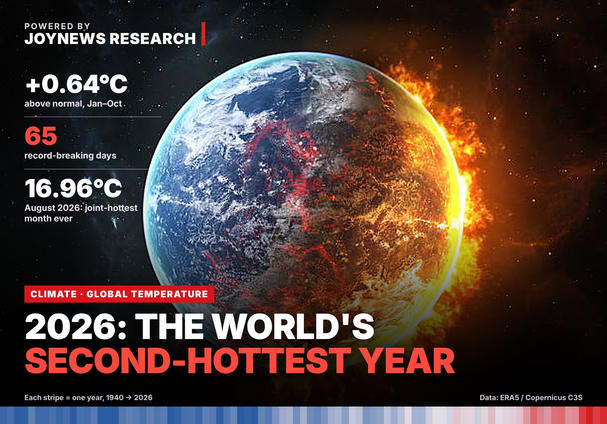
The Ghana Meteorological Agency (GMet) has cautioned that sustained El Niño conditions could result in prolonged dry spells in parts of the country, posing risks to agricultural production and food security. El Niño, the warm phase of the El Niño-Southern Oscillation (ENSO), is a naturally occurring climate phenomenon characterised by changes in sea surface temperatures and atmospheric conditions over the tropical Pacific Ocean. The phenomenon can influence rainfall distribution and temperature patterns across different regions of the world.
Deputy Director of Research and Applied Meteorology at GMet, Francisca Martey, says Ghanaians should prepare for higher temperatures and below-average rainfall in the coming months as El Niño continues to affect the country’s weather patterns. Speaking on Joy FM’s Super Morning Show on Monday, November 2, she indicated that the effects were already becoming evident, with several parts of the country experiencing relatively dry conditions and limited rainfall since September.
She explained that GMet’s September-October-November seasonal forecast had projected below-normal rainfall across most parts of Ghana, coupled with above-normal temperatures and prolonged dry spells. “We’re going to have long dry spells. We’re going to have below-normal rainfall,” she warned.
According to Mrs Martey, the prevailing conditions are likely to extend into the December-January-February period, which coincides with the Harmattan season, traditionally associated with dry air and dusty winds. She said the onset of the Harmattan could further intensify the dry conditions, adding that the period was also expected to bring higher temperatures.
“We are expecting that with this timing it will continue. The Harmattan will come in. The Harmattan will be drier,” she stated. “We expect that December, January, and February will be warmer,” she added. Mrs Martey identified northern Ghana as particularly vulnerable to the effects of El Niño, explaining that the region could experience more severe rainfall deficits despite the phenomenon affecting the entire country.
“Although the El Niño affects the whole country, its impact is higher on the northern areas,” she said. She warned that extended dry spells could undermine water availability for agricultural activities, particularly in communities and farming areas that depend on stored rainwater. “The little rainwater that they have kept or saved would also dry up,” she cautioned.
To reduce the potential impact on farming, Mrs Martey encouraged farmers to adopt climate-smart agricultural practices, including mulching, which helps retain moisture in the soil. “We are expecting that they will practise more mulching systems and climate-smart agricultural systems,” she said. She also urged farmers to intensify monitoring of their crops for pests and diseases, warning that changing weather conditions could create additional challenges for agricultural production.
Beyond the agricultural sector, Mrs Martey raised concerns about the potential implications of reduced rainfall across West Africa for shared water resources between Ghana and neighbouring countries. She noted that declining rainfall levels could affect the Volta River system and water availability within the region. During the interview, she also acknowledged that reduced water inflows into the Akosombo Dam could have consequences for hydroelectric power generation.
Meanwhile, GMet is engaging stakeholders in agriculture, health and water resources management, as well as the general public, to improve awareness and strengthen preparedness for the anticipated weather conditions. Mrs Martey urged Ghanaians to take necessary precautions against the expected heat and dusty conditions, advising the public to stay hydrated and protect themselves from exposure to dust.

