
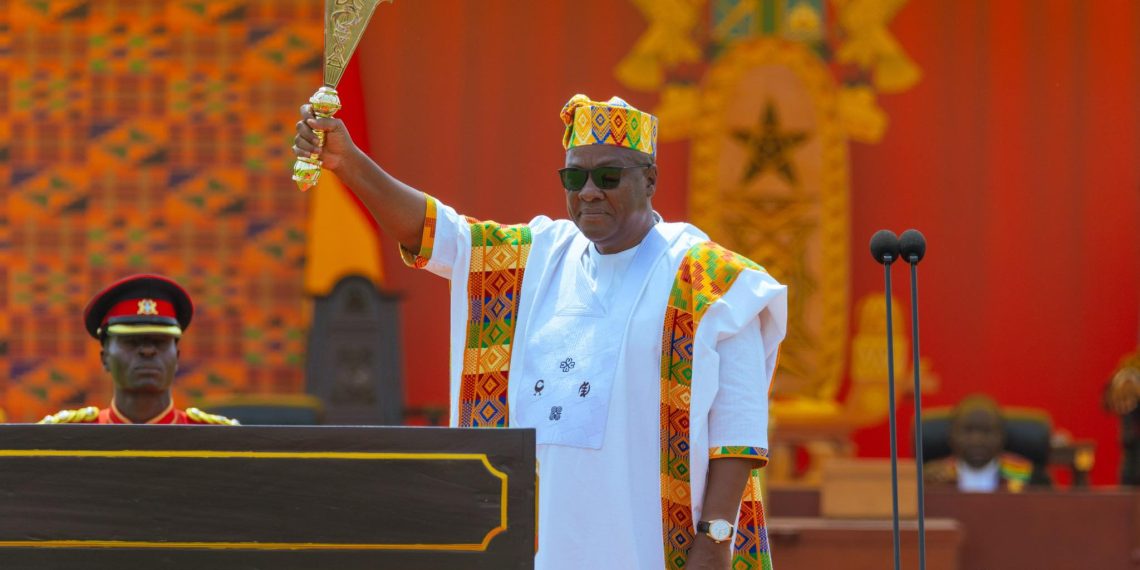
The New Patriotic Party (NPP) has filed a lawsuit in the Supreme Court seeking clarification on the constitutional provisions regarding presidential term limits. The party is asking the Court to determine whether the term limit for a president refers to a maximum of two terms, whether those terms are consecutive or non-consecutive. This clarification is intended to address public discussions about whether President John Dramani Mahama is eligible to seek another term in office in 2028, after having served two non-consecutive terms.
The writ of summons and statement of case, dated July 28, 2026, were submitted by the party’s solicitor, Godfred Yeboah Dame of Dame & Partners, with the Attorney-General named as the defendant. The New Patriotic Party (NPP) is asking the Supreme Court to clarify whether the constitutional limit of two presidential terms applies cumulatively, regardless of whether the terms are served consecutively or interrupted by a period out of office.
In its statement of case, the party is seeking interpretations of Articles 58(2) and 66(1), (2) and (3)(a) of the 1992 Constitution. Among the reliefs sought, the NPP wants the court to declare that the presidential term limit is two terms in total, irrespective of whether they are consecutive or non-consecutive. It is also asking the court to affirm that no individual may be elected President more than twice or occupy the office for more than two four-year terms, amounting to a maximum of eight years.
The party is further seeking clarification on the eligibility of a Vice-President who assumes the presidency and serves for more than half of the remainder of a predecessor’s term. It wants the court to rule that such a person would be eligible to contest for the presidency for only one additional term. The NPP is also asking the court to determine whether a person who has already served one presidential term can serve only one more term, regardless of whether the two terms are consecutive.
The legal action comes amid public debate over whether the constitutional provision limiting a President to “two terms” should be interpreted as permitting two consecutive terms rather than two terms over a lifetime. The NPP argues that the latter interpretation could create a situation in which a former President who serves one term, loses a bid for immediate re-election and later returns to office could serve two additional terms.
The party describes such a possibility as a threat to Ghana’s constitutional order, democracy, peace and stability. In its statement of case, the NPP describes the proposed interpretation as “absurd but dangerous for the democracy, peace and stability of the nation.” It further argues that accepting this interpretation would amount to introducing words into the Constitution that are not expressly provided for in the text.
According to the party, doing so would effectively allow the courts to alter the Constitution through judicial interpretation rather than the constitutionally prescribed amendment process. The NPP also draws on international precedents, including the 22nd Amendment to the United States Constitution, which restricts the number of times an individual may be elected President.
Additionally, the party cites constitutional developments in other African countries, arguing that attempts to alter presidential term limits have contributed to political instability in some jurisdictions. The party also relies on the 2011 report of Ghana’s Constitution Review Commission, which recommended an amendment to expressly clarify that a person who has served two presidential terms would no longer be eligible to contest the presidency.

