

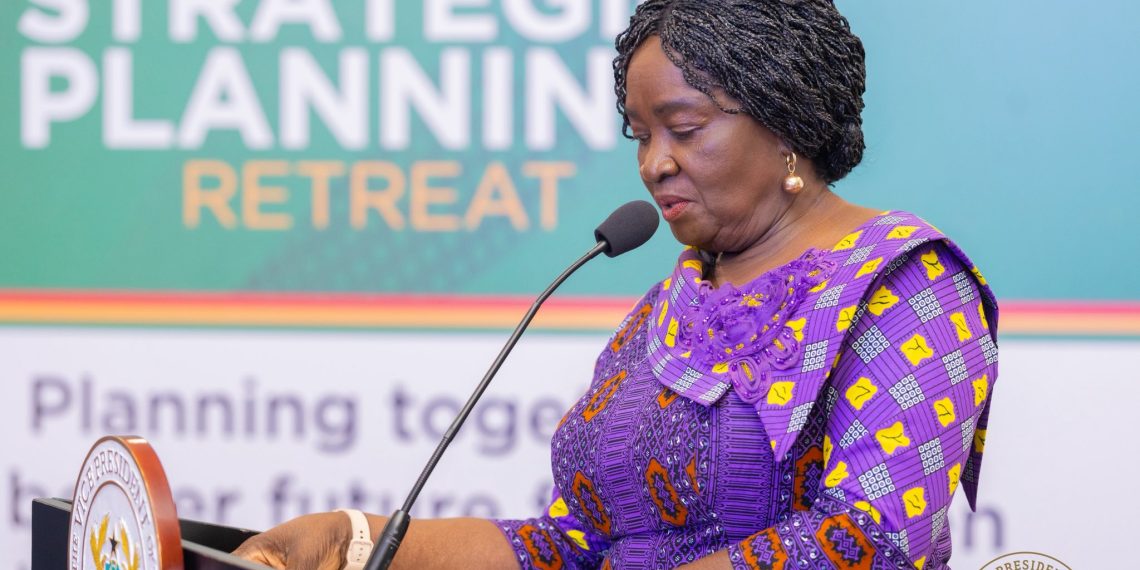
The government has launched a five-year Presidential Initiative on Maternal Health Emergency Response (PRIMER) as part of renewed efforts to reduce preventable maternal deaths and improve emergency healthcare for pregnant women across Ghana. The initiative was launched in Accra on Monday by Vice President Professor Naana Jane Opoku-Agyemang on behalf of President John Dramani Mahama.
The launch brought together key government institutions, development partners, health professionals, traditional and religious leaders, civil society organisations and community representatives to address the social, economic and health-system factors contributing to maternal mortality.
The Minister for Gender, Children and Social Protection, Dr Agnes Naa Momo Lartey, said her ministry was committed to supporting PRIMER by tackling inequalities and vulnerabilities that prevent women and girls from accessing timely healthcare. She stressed that women should not be denied or delayed in seeking healthcare because they lack information, financial resources, permission or the confidence to make decisions about their own health.
According to Dr Lartey, the ministry would continue to strengthen gender-responsive interventions aimed at improving women’s welfare, access to information and economic empowerment, while promoting their participation in household and community decision-making.
She also drew attention to the particular vulnerability of adolescent girls, especially those affected by poverty, child marriage, school dropout and inadequate access to sexual and reproductive health information and services.
The Deputy Minister of Health, Dr Ayensu Danquah, also participated in the launch alongside other officials and stakeholders.
The PRIMER initiative is expected to strengthen emergency maternal healthcare and promote coordinated action among government agencies, healthcare providers, communities and development partners in the fight against preventable maternal deaths.
She emphasised that safeguarding girls from child marriage, violence, and exploitation is central to improving maternal health outcomes. The ministry, she noted, will collaborate with key institutions and partners to ensure girls remain in school, foster their empowerment, and address the social and economic vulnerabilities that heighten the risk of early pregnancy. Dr. Lartey also highlighted the financial hardships faced by vulnerable families, pointing out that expenses for transportation, food, medicines, childcare, and other household needs often deter women from seeking timely healthcare.
She stressed that social protection programs play a vital complementary role in easing these economic pressures and enabling households to access essential services. She pledged the ministry’s commitment to working closely with the Ministry of Health, the National Development Planning Commission (NDPC), the United Nations Population Fund (UNFPA), local government bodies, traditional and religious leaders, civil society organizations, and development partners
The collaboration, according to her, will ensure that the gender, economic, and social aspects of maternal mortality are fully integrated into the national response. She emphasised that the ministry would strengthen community-level awareness and mobilisation regarding antenatal care, birth preparedness, recognising pregnancy danger signs, and the importance of seeking emergency medical care promptly.
Vice President Professor Naana Jane Opoku-Agyemang noted that Ghana has made significant progress in maternal healthcare, with nearly nine out of ten women receiving at least four antenatal care visits and a similar proportion delivering in health facilities. She mentioned that skilled health personnel attend to approximately 86 percent of births, indicating that more women are accessing the formal healthcare system.
However, she pointed out that Ghana’s maternal mortality ratio remains unacceptably high, exceeding the Sustainable Development Goal target of fewer than 70 maternal deaths per 100,000 live births by the year 2030.
She consequently urged stakeholders to place greater emphasis on the quality and preparedness of health services, emergency response systems, transportation, communication, and effective coordination between referring and receiving health facilities.
The Vice President noted that Ghana had a dedicated workforce of midwives, nurses, doctors, health managers and community health workers, adding that the country was already aware of many interventions capable of preventing maternal deaths.
She pointed to improvements achieved in certain areas as evidence that strong leadership, effective teamwork and continuous efforts to improve the quality of care could lead to better maternal health outcomes.
Professor Opoku-Agyemang also recalled President Mahama’s earlier account of an intervention during his first administration which, according to him, resulted in zero maternal deaths in Dodowa.
She observed that the major causes of maternal deaths were well established and, in many cases, could be prevented or treated. She therefore described deaths resulting from delays in care, shortages of essential supplies, inadequate emergency response capacity and slow corrective measures as particularly unfortunate.
The Vice President explained that PRIMER had been developed to tackle challenges that individual health facilities could not address on their own. These included gaps in financing, infrastructure, staffing, procurement, data systems and community mobilisation.
The Vice President explained that the initiative seeks to identify successful interventions in high-performing areas and replicate them more broadly. She noted that PRIMER was first presented in February 2026 to the SDGs Implementation Coordination Committee at the NDPC—a multisectoral technical working group—and has since evolved into the five-year program now being launched. Professor Opoku-Agyemang outlined three key pillars guiding PRIMER.
The first is political leadership and social mobilisation, designed to strengthen coordination among ministries, public institutions, local governments, traditional and religious leaders, civil society, the private sector, and communities. The second pillar emphasises institutionalised accountability and evidence-based action, focusing on enhancing maternal and perinatal death surveillance and response, improving the timeliness and quality of data, clarifying institutional responsibilities, and supporting regular high-level reviews of progress.
The third pillar centers on sustainable domestic financing while responsibly leveraging external support. The initiative will address critical areas such as maternity and newborn care, referral and transport systems, access to blood, medicines, and essential equipment, community engagement, and the use of data to inform decision-making.
The Vice President emphasised that the implementation framework must set clear targets, responsibilities, and reporting mechanisms, with progress reviewed regularly and lessons from high-performing regions applied more broadly. She cautioned that PRIMER should not function as a stand-alone program or duplicate existing government efforts, but rather operate within established institutional mandates while addressing persistent gaps.
She highlighted that maternal survival is influenced by factors beyond the health sector, including roads, communication, transportation, water, and energy, and called for collaboration with institutions overseeing these areas to ensure their programs contribute effectively to reducing maternal deaths. Professor Opoku-Agyemang also acknowledged the role of development partners, stressing that their support should reinforce national systems and help Ghana identify interventions that are both sustainable and scalable.
She called on families and communities to support women in seeking healthcare promptly, recognising warning signs and avoiding any actions that could delay access to care. She added that traditional and religious leaders, civil society organisations and the media also had an important role to play in reinforcing these messages. “It is not enough for many more women to enter our health facilities,” the Vice President said, emphasising that the true measure of success should be whether mothers and their babies are able to return home safely.
She also praised health professionals involved in maternal and newborn care for making critical decisions under pressure and responding swiftly to emergencies to safeguard the lives of mothers and their babies. Deputy Minister for Health, Dr Grace Ayensu Danquah, provided an update on Ghana’s maternal mortality situation, revealing that 134 women had died while attempting to give birth, with a significant number of the cases occurring following referrals.
She noted that a substantial proportion of the deaths had been recorded in the Ashanti Region, highlighting the urgent need to strengthen referral systems, improve emergency preparedness and enhance the capacity of health facilities receiving referred patients. According to Dr Danquah, the figures underscored the urgency of initiatives such as PRIMER, particularly in ensuring that women who develop complications are transported without delay and receive the appropriate care upon arrival at health facilities.
The launch was attended by representatives of the National Development Planning Commission (NDPC), United Nations Population Fund (UNFPA), development partners, civil society organisations, traditional and religious leaders, and the media. The government says PRIMER ultimately seeks to ensure that preventable complications arising during pregnancy and childbirth no longer lead to the loss of mothers’ lives.
The government says the ultimate goal of PRIMER is to ensure that preventable complications during pregnancy and childbirth no longer result in the loss of mothers’ lives.

